Pre-K Should be a Top Budget Priority
PPC Report Shows States Outpacing PA in Pre-K Investments
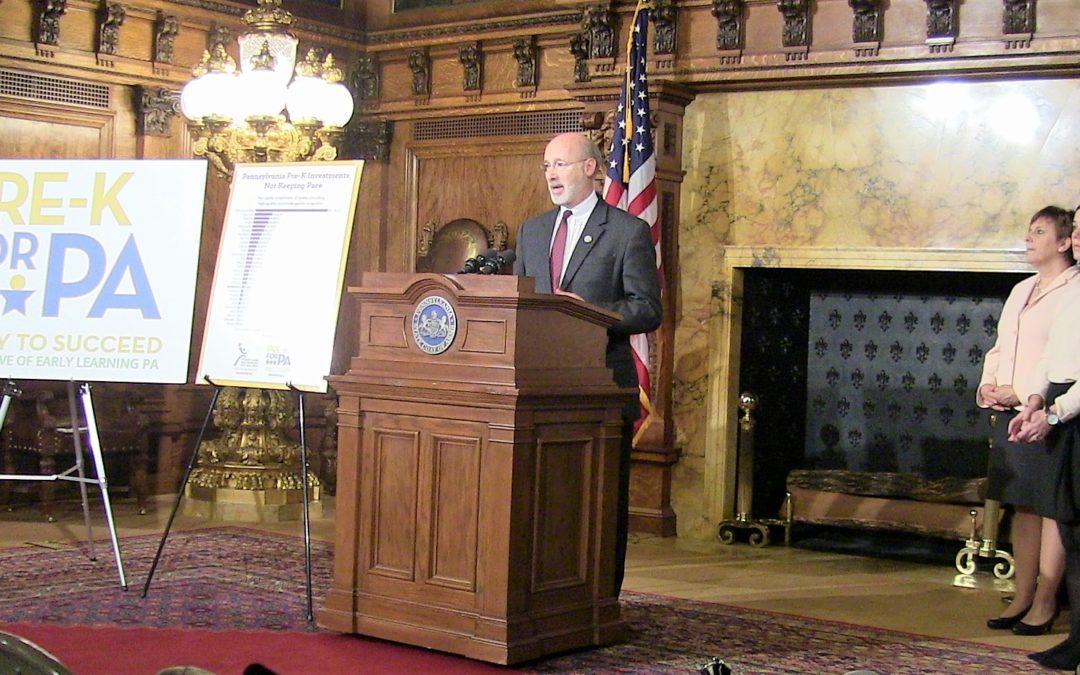
Harrisburg, PA (May 8, 2017)—Pennsylvania Partnerships for Children (PPC) released a report today in its role as a principal partner of the Pre-K for PA Campaign that commends Pennsylvania for making increased state investments in publicly funded, high-quality pre-k but highlighting that the commonwealth is lagging behind many other states, including economic competitors, in its per capita investment. PPC President and CEO Joan L. Benso was joined at a state capitol press conference by Governor Tom Wolf, Cumberland County District Attorney David Freed, York County business leader Michael Smeltzer and other partners in the campaign.
The report, “Prioritizing Pre-K in Pennsylvania: A State Comparison,” indicates that Pennsylvania joins 27 other states and the District of Columbia having made the wise choice to invest in high-quality pre-k, but only ranks 20th among the cohort in per capita investments. This places Pennsylvania behind many of our economic competitors and neighboring states including Maryland, New Jersey, New York and West Virginia.
“Countless research studies have proven time after time that pre-kindergarten works. The question is no longer does high-quality pre-k work, but how much is the commonwealth investing in high-quality pre-k to build a solid foundation for academic success,” said Joan Benso, President and CEO of PPC.
“Sixty-four percent of eligible preschool children in our state still cannot access this critical intervention as we have failed to invest enough resources,” she said.
Benso and her campaign partners call on the legislature to join the governor and expand pre-k investments in the state budget by $75 million for the coming fiscal year.
Children who attend high-quality pre-k are also less likely to be involved in crime later in life. Cumberland County District Attorney David J. Freed said, “I know from years of experience that we cannot simply arrest, prosecute and incarcerate our way out of our crime problems. We have to implement effective approaches that keep people from turning to crime in the first place. High-quality pre-k is a key focal point of that strategy.”
Business leaders have prioritized pre-k funding as a valuable public investment that helps create a productive workforce as it returns $4 in savings and benefits for every dollar invested.
“I know firsthand that if we fail to provide state support for early learning, we’re missing a critical opportunity to invest in the future of our economy,” said Michael Smeltzer, Early Learning Investment Commission (ELIC) member and President of Advancement Solutions LLC. “Children who attend high-quality pre-k enter school better prepared and while the research tells us that they enjoy higher academic achievement, we also know that they learn the soft skills necessary to become valuable future employees.”
Benso also presented an award to the governor from Pre-K for PA commending him for his leadership. The governor is joined by more than 50 bi-partisan legislators who are also being honored this spring.
“Prioritizing Pre-K in Pennsylvania: A State Comparison,” can be found at www.papartnerships.org/prekinpa or www.prekforpa.org.
###
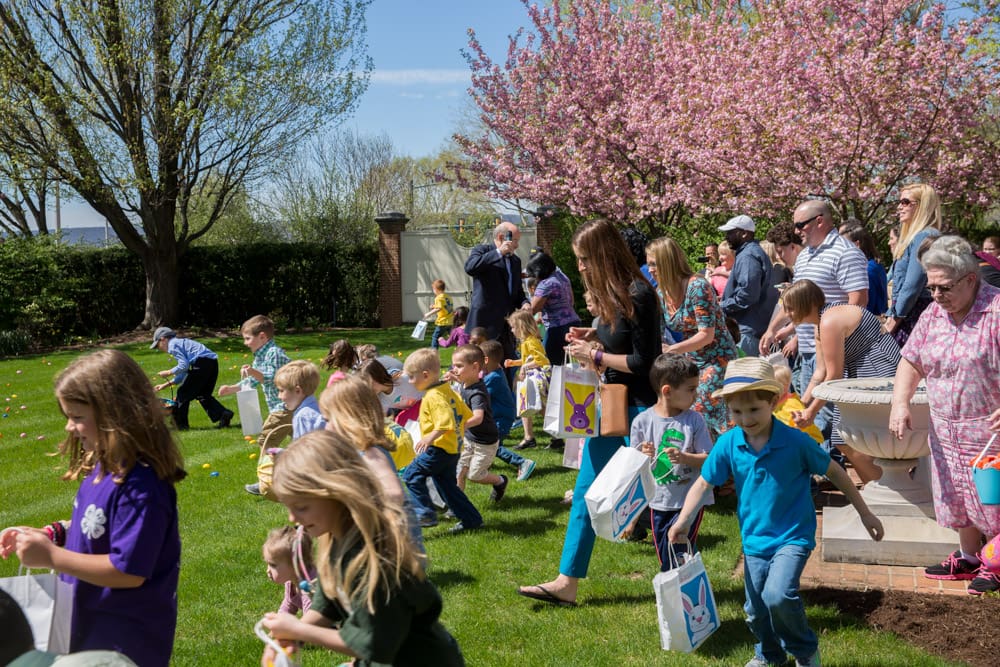
Governor Tom Wolf and First Lady Frances Wolf Join Pre-K for PA to Host Easter Egg Hunt at the Governor’s Residence, Highlight the Need to Invest in High-Quality Early Childhood Education
Harrisburg, PA – Governor Tom Wolf and First Lady Frances Wolf were joined today by preschoolers from Harrisburg-area pre-kindergarten centers and members of the Pre-K for PA campaign for an Easter Egg Hunt at the Governor’s Residence in Harrisburg. During the event, the Governor reiterated his commitment to investing in high-quality early childhood education.
“Frances and I are excited to host Harrisburg-area preschoolers at the Governor’s Residence today,” said Governor Wolf. “These children – and thousands of others like them from across Pennsylvania – are counting on us in Harrisburg to ensure that high-quality pre-kindergarten programs are available to them in their communities. That is why I called for a state budget that includes an increase of $75 million for pre-k, which will allow for more than 8,400 additional children to enroll in Pennsylvania Pre-K Counts and the Head Start Supplemental Assistance Program. The stronger the investment in high-quality early learning the greater the return – for our children and our commonwealth.”
Studies show that children who participate in high-quality pre-kindergarten perform better in school, graduate at higher rates and earn more throughout their working lives compared to peers that do not have access to early learning programs. Additionally, children who were previously enrolled in Pre-K Counts outperform their economically disadvantaged peers in third-grade math and reading.
The Pre-K for PA campaign lauded Governor Wolf for his commitment to expanding access to high quality pre-k to more Pennsylvania three- and four-year-olds: “Research continues to show that pre-k can make a difference – it can reduce grade repetition, special education placements, dropout rates, and ultimately save the commonwealth money,” said Jodi Askins, Executive Director of PennAEYC and principal partner of Pre-K for PA. “Governor Wolf’s steadfast commitment to investing in an early education system that provides access to 8,400 more Pennsylvania children this year is further evidence that he gets the value of pre-k and has Pennsylvania’s future as a top priority.”
Fair and increased education funding for all Pennsylvania schools continues to be one of Governor Wolf’s top priorities to ensure students are college and career ready.
The future of Pennsylvania depends on making investments in what matters most. In this year’s budget, Governor Wolf is proposing an additional $209 million increase in education funding. Our commonwealth is facing a serious budget deficit, but by reducing government bureaucracy and finding cost-savings, we can continue to invest in our children’s futures so we can make Pennsylvania stronger.
The 2017-18 budget investments in education include:
* $100 million increase in Basic Education Funding. Following $415 million in basic education and Ready to Learn Block Grant funding increases over the past two fiscal years, this increase will be distributed through the Basic Education Funding Formula, providing an equitable and predictable allocation to school districts across the commonwealth.
* $25 million increase in Special Education Funding. This increase, allocated to school districts through the formula adopted by the bipartisan legislative Special Education Funding Commission, builds upon a $50 million increase over the last two years.
* $75 million increase in high-quality early childhood education. Children who participate in high-quality pre-k programs perform better in school, graduate at higher rates and earn more throughout their lives compared to peers without access to early learning programs. Building upon $60 million in additional investment over the past two years, this nearly 40 percent increase in funding will allow more than 8,400 additional children to enroll in Pennsylvania Pre-K Counts and the Head Start Supplemental Assistance Program.
* $8.9 million increase for the 14 universities of the Pennsylvania State System of Higher Education. The governor will continue to work with PASSHE to develop individual college plans that address performance, affordability, and accountability, while partnering with employers to create structured career pathways.

House Bill 218 Does Not Adequately Invest in Services for PA’s Youngest Citizens
Harrisburg, PA (April 4, 2017) – As the Pennsylvania budget process gets underway today with the House of Representatives approving House Bill 218, the Pre-K for PA campaign issued a statement on the passage of a budget that does not adequately invest in Pennsylvania’s early learning continuum.
House Bill 218 included a $25 million increase to high-quality pre-k ($20 million for Pre-K Counts and $5 million for Head Start Supplemental Assistance Program), which is $50 million less than Governor Wolf’s proposed investment.
House Bill 218 also included deep cuts to other programs that ensure Pennsylvania’s earliest learners are prepared to be successful in school and beyond, including nearly $62 million less than Governor Wolf’s FY 2017-18 proposal for child care, a $28 million cut to the FY 2016-17 budget.
The principal partners of Pre-K for PA issued the following statement regarding the passage of HB 218:
“The budget process is never easy, and it is just getting underway, but today the House approved a budget introduced only yesterday that falls far short of what could be considered an adequate investment in services to our youngest citizens. Pennsylvania delivers high-quality, publicly-funded pre-k to many children, but nearly 113,000 remain unserved and a serious investment must be made to continue toward the goal of providing access to all at-risk kids.
“Pre-k doesn’t just benefit the children fortunate enough to access a high-quality program, it benefits the entire commonwealth. Research shows that every dollar invested in high-quality pre-k returns up to $17 in long-term savings and benefits through reduced costs to our schools and society, stronger earnings potential in our workforce and increased tax revenues supporting a more robust economy.
“A strong pre-k system is dependent on an appropriately financed child care system and this proposal will continue to undermine child care financing in our state. This lack of adequate funding undermines the continuum of high-quality early learning in Pennsylvania. The stronger the investment in high-quality early learning – including pre-k, child care and home visiting – the greater the return – for our children and our commonwealth.
“We urge legislators to continue investing in early learning for the sake of young children and our commonwealth and support a FY 2017-18 state budget that includes an increase of $75 million for pre-k, a $35 million increase in funding for child care and a $9 million increase in home visiting services.”
Community-Based Family Center and Nurse-Family Partnerships appropriations were also cut from the current fiscal year and HB 218 fails to include Governor Wolf’s proposed $9 million allocation for evidence-based home visiting to expand the reach of these and other similar programs.
Currently in Pennsylvania, there are more than 112,900 eligible preschool children, or 64 percent statewide, who qualify for high-quality, publicly funded pre-k but remain unserved. Governor Wolf’s budget proposal included $65 million in additional funding for the state’s Pre-K Counts program and an additional $10 million for the Head Start Supplemental Assistance Program. This $75 million expansion would serve more than 8,400 additional young children.
Pre-K for PA is an issue campaign supported by individuals and organizations across Pennsylvania who believe that investing in our children is the right choice and an urgent necessity. Its vision is that every 3- and 4-year-old in Pennsylvania will have access to high-quality pre-k. For more information visit www.prekforpa.org.
# # #
Pre-K, Early Learning Advocates Urge Bi-partisan Support of 2017-18 Investment Proposal
Executive Leaders Laud Gov. Wolf’s Commitment to High-Quality Pre-K
HARRISBURG (Feb. 7, 2017)— The Pre-K for PA campaign lauded Gov. Tom Wolf’s continued commitment to expanding access to high-quality pre-k in Pennsylvania after he announced a $75 million expansion as part of his 2017-18 budget address today.
The principal partners of Pre-K for PA issued the following statement regarding this budget proposal:
“Governor Wolf, along with a large majority of legislators from both sides of the aisle, understands that continued investment in high-quality pre-k programs is an effective long-term strategy to ensure that our next generation is ready to succeed. We are gratified that he is standing up for kids in his 2017-18 budget proposal. Serving more kids with this once-in-a-lifetime opportunity will reap strong cost savings in the future in the form of less public spending on special education, social welfare programs and crime.
“Pre-K for PA has united a diverse collection of stakeholders across the commonwealth that are urging the governor and legislature to come together behind a budget agreement that generates enough revenue to balance the budget and makes this investment in pre-k – making 2017 the Year of the Child.”
Governor Wolf’s budget proposal included $65 million in additional funding for the state’s Pre-K Counts program and an additional $10 million for the Head Start Supplemental Assistance Program. This $75 million expansion would serve more than 8,400 additional young children. Currently more than 112,000 eligible three- and four-year-olds do not have access to high-quality publicly funded pre-k programs.
EDITOR’S NOTE: The following quotes are offered by members of the Pre-K for PA Executive Leadership Council. This executive-level group includes the commonwealth’s top leaders across business, civic, education, law enforcement and even national security sectors in regions across the state.
Joe Meterchick, Regional President for Philadelphia, Delaware and Southern New Jersey, PNC Bank
“Access to high-quality pre-kindergarten is a fundamental building block of our state’s education system and helps ensure children have the strong foundation necessary to enter kindergarten ready to succeed. As we collectively look toward our future, we encourage Pennsylvania lawmakers to prioritize a commitment to pre-k as an investment in our commonwealth.”
Nick Scott Jr., Chief Executive Officer, Scott Enterprises
“There is overwhelming evidence that when education investment begins early it helps to close the achievement gap before it is too wide and expensive to overcome. Access to quality pre-k means that children are better prepared for future learning opportunities, less likely to need special education and remedial instruction, and more likely to graduate from high school and become a valued member of the workforce. Private funding can only fill the gap so much, and I applaud legislators and Governor Wolf for prioritizing pre-k in the 2017-18 budget.”
Peter P. Brubaker, President, Hammer Creek Enterprises LLC; Commissioner PA Early Learning
Investment Commission
“When it comes to making difficult budget decisions, our leaders in Harrisburg have demonstrated bipartisan support for continued investment in high-quality pre-k programs. In the past two budget cycles, Republicans and Democrats have prioritized pre-k and provided access for more than 6,000 young children. Governor Wolf has proposed $75 million in incremental funding to serve an additional 8,400 children in 2017. I strongly encourage our leaders in the State House and Senate to support the governor’s early childhood budget and to keep the pre-k momentum going.”
###
Pre-K for PA is an issue campaign supported by individuals and organizations across Pennsylvania who believe that investing in our children is the right choice and an urgent necessity. Our vision is to ensure that all children can enter school ready to succeed by making high-quality pre-k accessible to every 3- and 4-year-old in Pennsylvania. For more information www.prekforpa.org.
American kids losing the academic “medal count”
PA sports champions urge further state investment in quality pre-k to level the playing field for PA kids
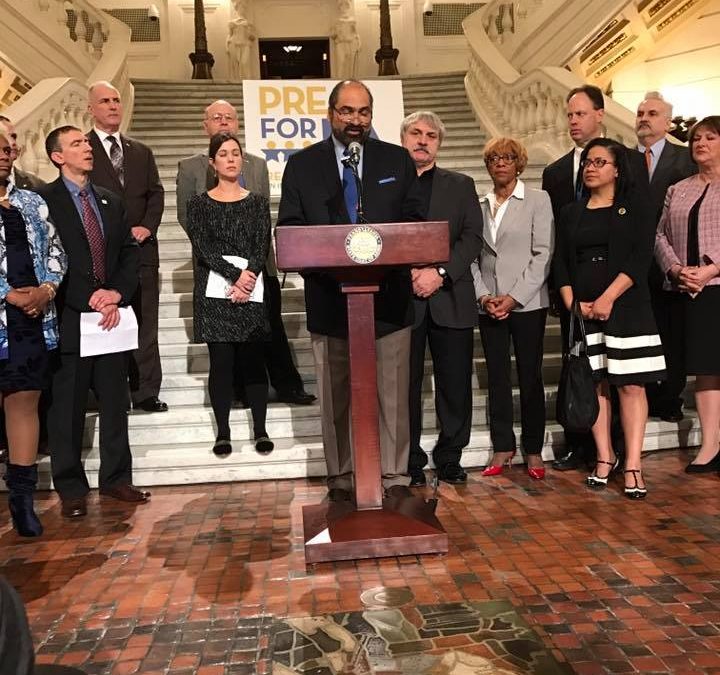
Harrisburg, PA, January 25 ⎯ It is time to level the playing field and scale up access to high-quality pre-kindergarten programs that prepare kids for academic and lifetime success, top Pennsylvania athletes said at a Capitol news conference today.
Pittsburgh Steelers legend Franco Harris and four-time Olympic medalist wrestler Bruce Baumgartner helped release a new report from the nonprofit Champions for America’s Future entitled, “High-Quality Early Education Can Help Kids Win the Academic ‘Medal Race.’”
The report brings to light new data from the Organization for Economic Cooperation and Development (OECD) showing that American children are far back in the pack when it comes to the international “medal count” on academic achievement. America’s 15-year-old children finished 25th in science and 40th in math out of the 72 countries taking the (OECD) PISA exam in 2015. This is in stark contrast to the USA’s dominating performance at the 2016 Rio Olympics winning 121 medals compared to second-place China’s 70 medals.
Recalling the great amounts of support he received along the way to becoming an NFL Hall of Famer, Franco Harris noted that far too many kids lack adequate support for becoming competitive students. Harris pointed to research showing 60 percent of the “achievement gap” in reading and 70 percent of the achievement gap in math between low-income and higher-income children in high school is already present at the start of kindergarten.
“Access to prekindergarten creates an opportunity to level the playing field for all children to achieve their full potential regardless of the income level of the families they inherited,” Harris said.
The report documents studies across the nation showing high-quality pre-k helps children develop in all areas⎯social, emotional and behavioral skills⎯along with essential pre-math and pre-reading skills. Additionally, the analysis team at the Organization for Economic Cooperation and Development identified high-quality pre-k as one of the common characteristics among the world’s “smartest countries.”
Pennsylvania has made strides in expanding access to high-quality pre-k, but more needs to be done, the athletes stressed. They noted that 112,900 three- and four-year-olds qualify for high-quality, publicly funded pre-k that remain unserved due to lack of funding⎯that’s enough to fill Penn State’s Beaver Stadium and leave another 7,000 children in the parking lot.
Former Olympian freestyle heavyweight wrestler Bruce Baumgartner, one of just eight athletes in U.S. history to medal in four different Olympiads (two gold, one silver and one bronze), emphasized his desire to see all children achieve their full potential on and off the field and become champions in life. “Athletes know that every medal we earn represents a team effort,” he said. “Our youngest children deserve the same team effort guiding them toward success on and off the field. Unfortunately, far too many kids don’t have access to quality pre-k, which hampers their chances for success before they even reach the starting line of life.”
Bruce Clash, on behalf of the Pre-K for PA Campaign, explained that all Pennsylvanians bear the brunt of children being left behind academically. “When a child starts school already behind, the cost to educate that child already begins to escalate,” said Clash. “Kids that continue to fall behind in school have a greater risk of dropping out and engaging in criminal activity. This is why the research on pre-k shows that it can return over $29,000 on average, net benefits to society for every child served.”
The athletes join a growing chorus of voices across Pennsylvania that are part of the Pre-K for PA Campaign in calling on Pennsylvania lawmakers and Governor Wolf to expand access to publicly funded high-quality pre-k for all eligible children and begin to address affordability issues among the middle class. Specifically, the Campaign is calling for an $85 million increase to state pre-k funding in the 2017-18 state budget to serve 10,000 additional children.
Also participating in the event were State Senator Pat Browne and Representative Mark Longietti, who are Co-Chairs of the bicameral, bipartisan Early Childhood Education Caucus; and Suzann Morris, the Deputy Secretary of the Office of Child Development and Early Learning within the PA Departments of Education and Human Services.
###
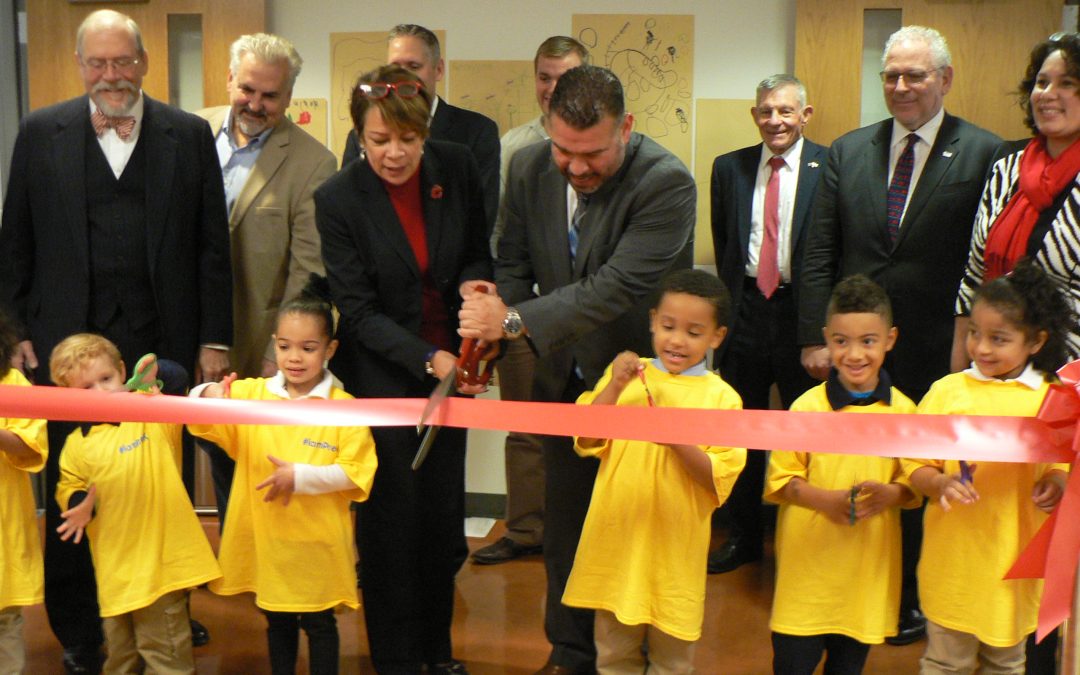
Lancaster Mayor, County Officials Host PA Education Secretary Pedro Rivera for Pre-K Roundtable; Opening of New Pre-K Classrooms
Advocates Urge Continued Investment
Lancaster, PA – Pennsylvania Secretary of Education, Pedro Rivera joined Lancaster Mayor Rick Gray alongside state, county and local officials for a roundtable discussion on pre-k today. Officials took the opportunity to mark the statewide expansion of a pre-kindergarten with a ribbon cutting ceremony in the new pre-k classrooms at Lafayette Elementary School.
“As we invest in the education of our children, we are investing in our city’s future,” said Lancaster Mayor Rick Gray. “Pre-k programs are backed by decades of research showing that children who attend have a more positive trajectory in life. This means more kids finishing high school, getting a job, less reliance on social services and less crime in our community.”
The expansion of high-quality pre-k was made possible by the infusion of an additional $25 million in funding for Pennsylvania Pre-K Counts and $5 million for the Head Start Supplemental Assistance Program in both the state’s 2015-16 and 2016-17 budgets. Lancaster County early learning providers received new funding for more than 320 expansion seats. Pre-K Counts and the Head Start State Supplemental are the primary state funding sources for high-quality pre-k in Pennsylvania.
Randy Patterson, Director of Economic Development & Neighborhood Revitalization for the City of Lancaster and Board Chair for the United Way of Lancaster County, noted that the added capacity to high-quality pre-k is welcome news as only 17 percent of income eligible 3- and 4-year-olds in Lancaster County have access to publicly funded high-quality pre-k.
“While I join you to celebrate this new classroom, I must be clear that we still have a lot of work to do,” said Patterson. “More than 7,700 income eligible three- and four-year-olds in Lancaster County still lack access to this once-in-a-lifetime learning opportunity.”
More than 120,000 eligible children, or 69 percent of all three- and four-year-olds, across the commonwealth lack access to publicly funded, high-quality pre-k each year.
Robert M. Krasne, Chief Executive Officer of Steinman Communications and member of PA’s Early Learning Investment Commission, noted that Pennsylvania is experiencing a shortage of qualified workers. An effective and comprehensive pre-k program is a way to begin to address that shortage.
“A recent survey from the statewide chamber of business and industry showed that more than half of the 400+ Pennsylvania employers who were surveyed reported trouble finding people with adequate skills, training, or education. This was especially true of technical and skilled job openings,” said Krasne. “The proven benefits of pre-k establish that developing a competent workforce should start at a young age. The lack of access statewide to pre-k is particularly troubling.”
Mr. Krasne referenced a large body of research that shows children who benefit from high-quality pre-k:
- Enter kindergarten with stronger literacy, language, math and social/emotional skills;
- Are less likely to need special education services, less likely to repeat grades, and more likely to graduate and enroll in college.
- Over a lifetime, these young learners will see stronger employment opportunities and increased earning potential, and they are less likely to commit juvenile and adult crimes.
Lancaster County District Attorney Craig Stedman stressed the role high-quality pre-k plays in reducing disruptive or anti-social behaviors that, if unaddressed, can lead to delinquent and criminal behavior later in life.
“A review of Pennsylvania’s state inmate population reveals that more than 50 percent of inmates have not graduated from high school,” Stedman commented. “This revealing statistic is more reason for the imperative that law enforcement leaders place on educational success, which is best achieved by children getting a strong early educational foundation.”
Retired Army Lieutenant General Dennis Benchoff of Lancaster informed the group that the military is also concerned about a future qualified workforce and its potential impact on national security.
“Unfortunately, we know we have our work cut out for us,” said Lt. Gen. Benchoff. “According to the Department of Defense, 72 percent of Pennsylvania’s 17-24 year-olds are not eligible for military service due to inadequate education, a criminal record, or obesity or other health condition. In this way, an unqualified workforce has real national and economic security concerns for the future. It’s my hope that Pennsylvania continues to prioritize early learning.”
Also participating in the event were State Representative Bryan Cutler; State Representative Mike Sturla; Deputy Secretary Suzann Morris, Office of Child Development and Early Learning; Lancaster Police Chief Keith Sadler; Dr. Damaris Rau, Superintendent for the School District of Lancaster; Karen Wynn, Coordinator of School Improvement and Federal Programs, School District of Lancaster; Andrea Heberlein, Lead Director of Community Impact, United Way of Lancaster County; and Dr. Jill Koser, Education & Child Development Impact Team Leader, Community Action Partnership.
Pre-K for PA is an issue campaign supported by thousands of individuals and organizations across Pennsylvania who believe that investing in our children is a necessary and urgent priority. Fight Crime: Invest in Kids is one of 10 founding partners. For more information, visit prekforpa.org.