Pre-K for PA campaign, Rendell and Schweiker urge 2018 election candidates to support pre-k investments to improve PA’s economic competitiveness
New report shows Pennsylvania ranks in bottom half of per capita investments in high-quality pre-k
Doylestown, PA (January 17, 2018)—During a news conference today, the Pre-K for PA Campaign, former Governors Edward G. Rendell, Mark S. Schweiker and Todd Alderfer, SVP/Commercial Lending of QNB Bank urged candidates for governor, the state legislature and U.S. Congress to support high-quality pre-k to improve Pennsylvania’s economic competitiveness. Year after year, the economy and education are among the top issues weighing on the minds of voters.
According to “Pre-K Works, So Why Not PA?” Pennsylvania ranks 18th out of 30 states that make public investments in high-quality, publicly funded pre-k, despite having increased its per capita investment by $30 million for the current fiscal year.
“We’ve got a big decision to make this November – as do voters in 12 of the 17 states that invest more than Pennsylvania – when we head the polls to elect a new governor,” said Rendell. “Candidates seeking public office must commit to getting Pennsylvania out of the bottom half of states and make it a top state for pre-k investments.”
“High-quality pre-kindergarten is not a luxury. It is an investment in Pennsylvania’s economy,” said Schweiker. “An educated workforce is essential if Pennsylvania hopes to compete in the regional and global marketplace, and high-quality pre-k helps prepare our future workforce for success.”
Presently only 36 percent of eligible children in Pennsylvania benefit from the opportunity, according to the report. Without expanded access, school success and skill development for early learners will be weakened, ultimately compromising the state’s ability to develop a stronger workforce.
Joan Benso, President and CEO of Pennsylvania Partnerships for Children, noted that a mix of red and blue states invest more per capita than Pennsylvania including Maryland, New Jersey, New York and West Virginia.
“We know that pre-k works and the widespread, bipartisan support it enjoys is undeniable,” she said. “Candidates who support stronger state investments will be proposing a winning combination for voters on both fronts and will enjoy support from a broad array of business leaders.”
Alderfer added, “As a local business leader, I understand the value of high-quality pre-k and its return on investment for Bucks County and the Commonwealth. Creating a competitive economic advantage for Pennsylvania starts with strong investments in high-quality, publicly funded pre-k.”
To reach all children who would most benefit, state policymakers should invest $85 million in the 2018-19 fiscal year to double the expansion of the last three years, and grow the investment with an additional $225 million by the 2020-21 fiscal year to serve all at-risk children.
“Pre-K Works, So Why Not PA?” can be found at www.papartnerships.org/prekinpa.
###
PA Principals Association, Early Learning Advocates in Montco. Urge Support for Substantial Investments in High-Quality Pre-K
West Pottsgrove, PA (Sept. 20, 2017)—Elementary School Principals Resoundingly Support Pre-K Investments details findings of a recent statewide survey of elementary school principals to better understand their perception of high-quality pre-k and its importance in building the foundation necessary for children to enter kindergarten ready to succeed. Nearly 99 percent agree that publicly funded, high-quality pre-k is an important tool for preparing children for kindergarten, particularly those at risk.Representatives from the Pennsylvania Principals Association, the statewide Pre-K for PA campaign, Pottsgrove School District and the Montgomery County Intermediate Unit Pre-K Counts program today discussed high-quality pre-k and its effectiveness in providing a strong academic foundation before a child enters kindergarten, and urged the state to increase investments in this once-in-a-lifetime learning opportunity during a press conference at West Pottsgrove Elementary School.
The event coincided with the statewide release of a new report, “Elementary School Principals Resoundingly Support Pre-K Investments,” produced by the Pennsylvania Principals Association in partnership with the statewide Pre-K for PA campaign. The report shows nearly 99 percent of elementary school principals agree that publicly funded, high-quality pre-k is an important tool for preparing children for kindergarten, particularly those at risk.
“High-quality pre-k provides the opportunity for children to get ready for school, helping to build their early literacy skills, which provides children with the foundation to have the stamina and skills to be successful in elementary school,” said Terri Koehler, Principal of West Pottsgrove Elementary School.
Elementary principals’ perceptions confirm research that shows that high-quality pre-k is especially beneficial for children from low-income families, helping put them at the same starting line as their more economically advantaged peers by the time they start school.
Dr. Lois Robinson, Director of the Office of Student Services for the Montgomery County Intermediate Unit added, “When families bring their children into the classroom, they are so thrilled to have access to high-quality pre-k, and to be able to walk their children to and from this enriching, safe environment. Some of them thought it would never happen. However, for many, it doesn’t ever happen.”
Approximately 64 percent or 2 in 3 eligible preschoolers don’t have the opportunity to attend publicly funded, high-quality pre-k.
According to the report, more than 97 percent of elementary school principals in the Commonwealth strongly agree or agree that additional state investments in publicly funded, high-quality pre-k should be made. They join an ever-growing list of supporters who have articulated strong support for state funding increases in pre-k, which also includes governors and legislators from both sides of the aisle, business and education leaders, law enforcement officials, high-ranking military officers, pediatricians and world-class athletes.
In addition, principals, who are on the frontline of delivering quality education, reported they can easily distinguish between those students who attended high-quality pre-k and those who missed this once-in-a-lifetime opportunity.
“When a child enters kindergarten unable to recognize some letters and numbers, complete a puzzle, or lacks other skills that can set that child on a path to succeed in school, that child is at an unfair disadvantage,” said Dr. Paul Healey, Executive Director of the Pennsylvania Principals Association.
“Principals face challenges leveling the playing field to ensure that child can reach his or her full potential. If every child who needs it had access to high-quality pre-k, we would see fewer children struggling or needing special education or remediation. We would see more self-confident children who love education as much as we do.”
Responses to the survey were received from a diverse group of rural, suburban and urban school principals who are responsible for educating nearly 60 percent of elementary students statewide. They reported improvements in age-appropriate behaviors and the ability to reach academic milestones in students who attended high-quality pre-k.
“Too many children at risk of school failure miss the opportunity to attend high-quality publicly funded pre-kindergarten. Pre-k works! Decades of research has proven it and this survey adds the validation of Pennsylvania’s elementary principals to the value of the public investment,” said Joan Benso, President and CEO of Pennsylvania Partnerships for Children, a founding member of the Pre-K for PA Campaign.
“Elementary School Principals Resoundingly Support Pre-K Investments” is available here.
Bipartisan Budget Agreement a Victory for Kids, $30 Million Pre-K Investment Will Serve Thousands More Young Learners
Early Learning Programs Get Significant Boost in 2017-18
HARRISBURG (June 30, 2017)— The Pre-K for PA campaign called the $30 million investment in pre-k as part of the 2017-18 state budget agreement a momentum-building moment, making significant progress towards the goal of expanding access to all children eligible for Pre-K Counts and Head Start. The investment will open access to high-quality pre-k for thousands more three- and four-year-olds across the commonwealth.
The principal partners of Pre-K for PA issued the following statement regarding the investment:
“Governor Wolf along with Democrat and Republican legislators deserve a tremendous amount of credit for prioritizing the commonwealth’s three- and four-year-olds by investing $30 million in high-quality pre-k, to serve thousands more of the commonwealth’s youngest learners.
“Elected officials from both sides of the aisle have increasingly understood that expanded investment in high-quality pre-k programs is an effective long-term strategy to ensure that our next generation is ready to succeed. Access to a high-quality pre-k experience also reaps significant cost savings in the future in the form of less public spending on special education, social welfare programs, and criminal justice.
“In this difficult budget cycle, we commend the governor and legislature for their strong commitment to early learning programs. FY 17-18 state funding for child care and home visiting were at risk through this process but policymakers boosted funding for both in addition to the increase in pre-k. The stronger the investment in high-quality early learning – including pre-k, child care, and home visiting – the greater the return – for our children and our commonwealth.”
The 2017-18 spending plan includes the following expanded investments to early learning:
- Increases Pre-K Counts investment: $25 million
- Increases investment in Head Start Supplemental Assistance Program: $5 million
- Restores 2016-17 cut to Child Care Services: $20 million
- New investment in evidenced-based home visiting: $4.77 million
####
Pre-K Should be a Top Budget Priority
PPC Report Shows States Outpacing PA in Pre-K Investments
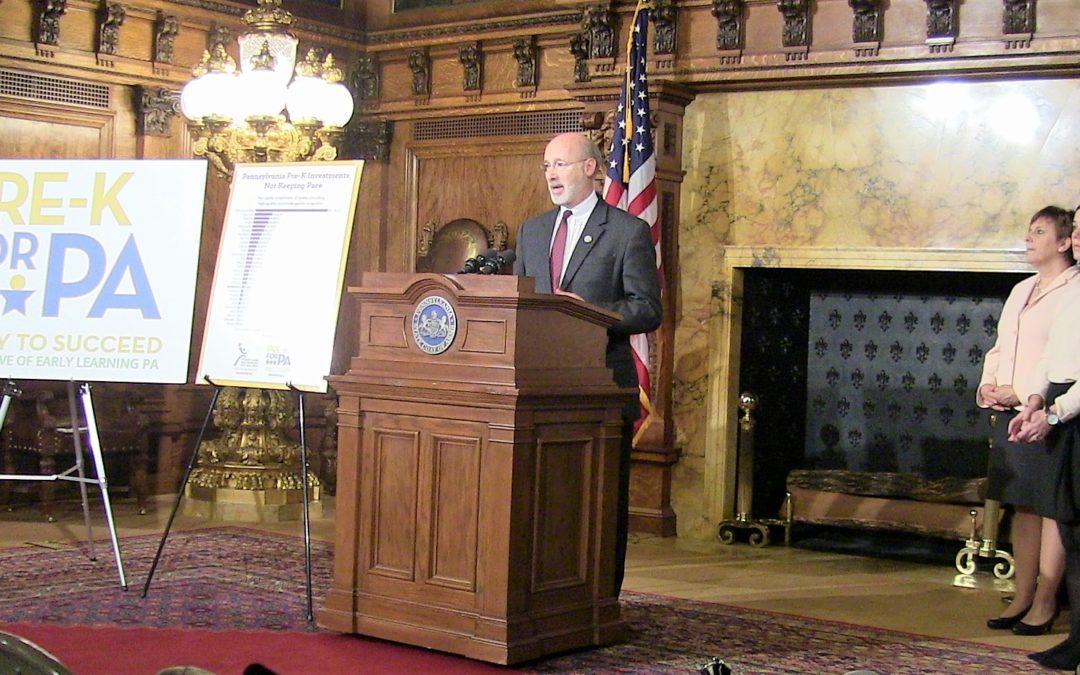
Harrisburg, PA (May 8, 2017)—Pennsylvania Partnerships for Children (PPC) released a report today in its role as a principal partner of the Pre-K for PA Campaign that commends Pennsylvania for making increased state investments in publicly funded, high-quality pre-k but highlighting that the commonwealth is lagging behind many other states, including economic competitors, in its per capita investment. PPC President and CEO Joan L. Benso was joined at a state capitol press conference by Governor Tom Wolf, Cumberland County District Attorney David Freed, York County business leader Michael Smeltzer and other partners in the campaign.
The report, “Prioritizing Pre-K in Pennsylvania: A State Comparison,” indicates that Pennsylvania joins 27 other states and the District of Columbia having made the wise choice to invest in high-quality pre-k, but only ranks 20th among the cohort in per capita investments. This places Pennsylvania behind many of our economic competitors and neighboring states including Maryland, New Jersey, New York and West Virginia.
“Countless research studies have proven time after time that pre-kindergarten works. The question is no longer does high-quality pre-k work, but how much is the commonwealth investing in high-quality pre-k to build a solid foundation for academic success,” said Joan Benso, President and CEO of PPC.
“Sixty-four percent of eligible preschool children in our state still cannot access this critical intervention as we have failed to invest enough resources,” she said.
Benso and her campaign partners call on the legislature to join the governor and expand pre-k investments in the state budget by $75 million for the coming fiscal year.
Children who attend high-quality pre-k are also less likely to be involved in crime later in life. Cumberland County District Attorney David J. Freed said, “I know from years of experience that we cannot simply arrest, prosecute and incarcerate our way out of our crime problems. We have to implement effective approaches that keep people from turning to crime in the first place. High-quality pre-k is a key focal point of that strategy.”
Business leaders have prioritized pre-k funding as a valuable public investment that helps create a productive workforce as it returns $4 in savings and benefits for every dollar invested.
“I know firsthand that if we fail to provide state support for early learning, we’re missing a critical opportunity to invest in the future of our economy,” said Michael Smeltzer, Early Learning Investment Commission (ELIC) member and President of Advancement Solutions LLC. “Children who attend high-quality pre-k enter school better prepared and while the research tells us that they enjoy higher academic achievement, we also know that they learn the soft skills necessary to become valuable future employees.”
Benso also presented an award to the governor from Pre-K for PA commending him for his leadership. The governor is joined by more than 50 bi-partisan legislators who are also being honored this spring.
“Prioritizing Pre-K in Pennsylvania: A State Comparison,” can be found at www.papartnerships.org/prekinpa or www.prekforpa.org.
###
Governor Tom Wolf and First Lady Frances Wolf Join Pre-K for PA to Host Easter Egg Hunt at the Governor’s Residence, Highlight the Need to Invest in High-Quality Early Childhood Education
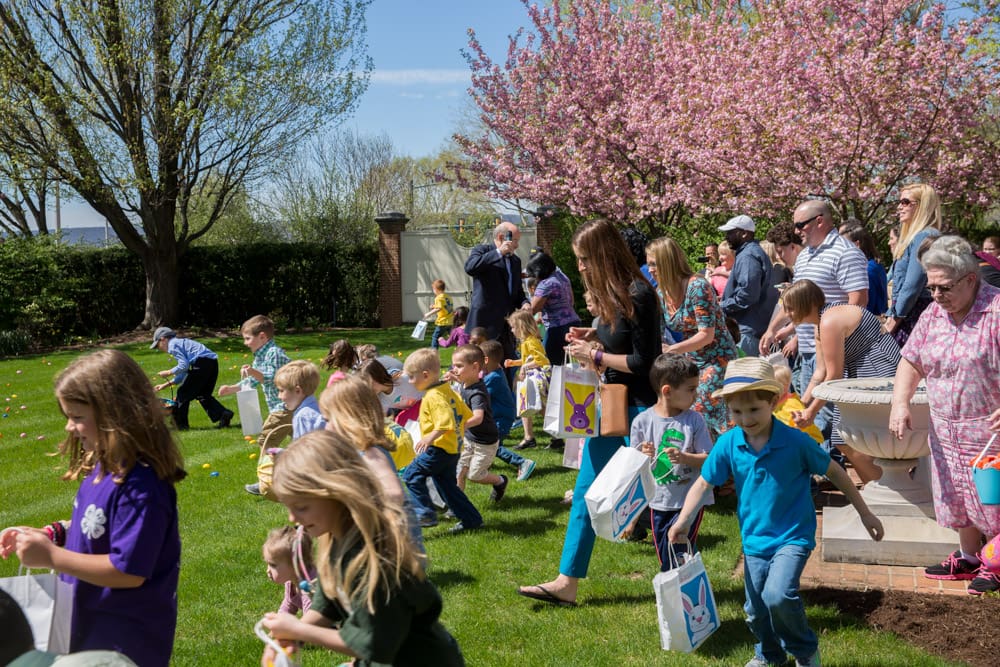
Harrisburg, PA – Governor Tom Wolf and First Lady Frances Wolf were joined today by preschoolers from Harrisburg-area pre-kindergarten centers and members of the Pre-K for PA campaign for an Easter Egg Hunt at the Governor’s Residence in Harrisburg. During the event, the Governor reiterated his commitment to investing in high-quality early childhood education.
“Frances and I are excited to host Harrisburg-area preschoolers at the Governor’s Residence today,” said Governor Wolf. “These children – and thousands of others like them from across Pennsylvania – are counting on us in Harrisburg to ensure that high-quality pre-kindergarten programs are available to them in their communities. That is why I called for a state budget that includes an increase of $75 million for pre-k, which will allow for more than 8,400 additional children to enroll in Pennsylvania Pre-K Counts and the Head Start Supplemental Assistance Program. The stronger the investment in high-quality early learning the greater the return – for our children and our commonwealth.”
Studies show that children who participate in high-quality pre-kindergarten perform better in school, graduate at higher rates and earn more throughout their working lives compared to peers that do not have access to early learning programs. Additionally, children who were previously enrolled in Pre-K Counts outperform their economically disadvantaged peers in third-grade math and reading.
The Pre-K for PA campaign lauded Governor Wolf for his commitment to expanding access to high quality pre-k to more Pennsylvania three- and four-year-olds: “Research continues to show that pre-k can make a difference – it can reduce grade repetition, special education placements, dropout rates, and ultimately save the commonwealth money,” said Jodi Askins, Executive Director of PennAEYC and principal partner of Pre-K for PA. “Governor Wolf’s steadfast commitment to investing in an early education system that provides access to 8,400 more Pennsylvania children this year is further evidence that he gets the value of pre-k and has Pennsylvania’s future as a top priority.”
Fair and increased education funding for all Pennsylvania schools continues to be one of Governor Wolf’s top priorities to ensure students are college and career ready.
The future of Pennsylvania depends on making investments in what matters most. In this year’s budget, Governor Wolf is proposing an additional $209 million increase in education funding. Our commonwealth is facing a serious budget deficit, but by reducing government bureaucracy and finding cost-savings, we can continue to invest in our children’s futures so we can make Pennsylvania stronger.
The 2017-18 budget investments in education include:
* $100 million increase in Basic Education Funding. Following $415 million in basic education and Ready to Learn Block Grant funding increases over the past two fiscal years, this increase will be distributed through the Basic Education Funding Formula, providing an equitable and predictable allocation to school districts across the commonwealth.
* $25 million increase in Special Education Funding. This increase, allocated to school districts through the formula adopted by the bipartisan legislative Special Education Funding Commission, builds upon a $50 million increase over the last two years.
* $75 million increase in high-quality early childhood education. Children who participate in high-quality pre-k programs perform better in school, graduate at higher rates and earn more throughout their lives compared to peers without access to early learning programs. Building upon $60 million in additional investment over the past two years, this nearly 40 percent increase in funding will allow more than 8,400 additional children to enroll in Pennsylvania Pre-K Counts and the Head Start Supplemental Assistance Program.
* $8.9 million increase for the 14 universities of the Pennsylvania State System of Higher Education. The governor will continue to work with PASSHE to develop individual college plans that address performance, affordability, and accountability, while partnering with employers to create structured career pathways.
House Bill 218 Does Not Adequately Invest in Services for PA’s Youngest Citizens
Harrisburg, PA (April 4, 2017) – As the Pennsylvania budget process gets underway today with the House of Representatives approving House Bill 218, the Pre-K for PA campaign issued a statement on the passage of a budget that does not adequately invest in Pennsylvania’s early learning continuum.
House Bill 218 included a $25 million increase to high-quality pre-k ($20 million for Pre-K Counts and $5 million for Head Start Supplemental Assistance Program), which is $50 million less than Governor Wolf’s proposed investment.
House Bill 218 also included deep cuts to other programs that ensure Pennsylvania’s earliest learners are prepared to be successful in school and beyond, including nearly $62 million less than Governor Wolf’s FY 2017-18 proposal for child care, a $28 million cut to the FY 2016-17 budget.
The principal partners of Pre-K for PA issued the following statement regarding the passage of HB 218:
“The budget process is never easy, and it is just getting underway, but today the House approved a budget introduced only yesterday that falls far short of what could be considered an adequate investment in services to our youngest citizens. Pennsylvania delivers high-quality, publicly-funded pre-k to many children, but nearly 113,000 remain unserved and a serious investment must be made to continue toward the goal of providing access to all at-risk kids.
“Pre-k doesn’t just benefit the children fortunate enough to access a high-quality program, it benefits the entire commonwealth. Research shows that every dollar invested in high-quality pre-k returns up to $17 in long-term savings and benefits through reduced costs to our schools and society, stronger earnings potential in our workforce and increased tax revenues supporting a more robust economy.
“A strong pre-k system is dependent on an appropriately financed child care system and this proposal will continue to undermine child care financing in our state. This lack of adequate funding undermines the continuum of high-quality early learning in Pennsylvania. The stronger the investment in high-quality early learning – including pre-k, child care and home visiting – the greater the return – for our children and our commonwealth.
“We urge legislators to continue investing in early learning for the sake of young children and our commonwealth and support a FY 2017-18 state budget that includes an increase of $75 million for pre-k, a $35 million increase in funding for child care and a $9 million increase in home visiting services.”
Community-Based Family Center and Nurse-Family Partnerships appropriations were also cut from the current fiscal year and HB 218 fails to include Governor Wolf’s proposed $9 million allocation for evidence-based home visiting to expand the reach of these and other similar programs.
Currently in Pennsylvania, there are more than 112,900 eligible preschool children, or 64 percent statewide, who qualify for high-quality, publicly funded pre-k but remain unserved. Governor Wolf’s budget proposal included $65 million in additional funding for the state’s Pre-K Counts program and an additional $10 million for the Head Start Supplemental Assistance Program. This $75 million expansion would serve more than 8,400 additional young children.
Pre-K for PA is an issue campaign supported by individuals and organizations across Pennsylvania who believe that investing in our children is the right choice and an urgent necessity. Its vision is that every 3- and 4-year-old in Pennsylvania will have access to high-quality pre-k. For more information visit www.prekforpa.org.
# # #