Lancaster Online Op-ed: Businesses: Invest in Preschool Education
JENNIFER HENRY | Special to LNP
Congratulations to our youngest graduates, those just out of preschool.
Local families will proudly cherish photos of their preschoolers wearing miniature mortarboards and clutching colorful diplomas this graduation season.
But do we fully understand the meaning of this occasion and its impact on these children and their eventual place in society?
A child’s success in school, and ultimately in life, is tied to this event marking the passing of a child’s first five years spent, at least partly, in an early learning program. As research over the past 20 years is proving, there is an awful lot to celebrate.
Children who have access to high- quality care and learning in their first five years are:
— More likely to enter kindergarten prepared to learn and, according to a 2007 report for the Louisiana Department of Education, less likely by half to need special, costly interventions and supports.
— More likely to graduate from high school and less likely to be incarcerated.
— More likely to enter higher wage-earning fields and less likely to rely on public subsidies as adults, according to Stanford University economist Eric Hanushek.
— More likely to enroll in college and better prepared to enter military service, according to the organization Mission: Readiness.
Further economic studies help us understand the benefits of high-quality early learning in terms of return on investment. For every dollar invested in early learning, there is an immediate return in terms of job creation, availability of employees in the job market, and increased revenues realized through purchase of services and goods in communities.
Over the long term, Pennsylvania Partnerships for Children says, there is an estimated 17 to 1 return in terms of economic benefit from an initial investment in early learning.
And then there is science —biological evidence that brain development is 90 percent complete by age 5. Synapses and neurons are being fed by early-learning investment, too.
The experiences a child has up to this point — at home, in preschool, in child care — shape his trajectory for life. We are creating human capital, and we only get one chance per generation to do it right. There is no rewind button for the first five years.
Read the full article here.
Guest commentary: The Value of Pre-K from a Pediatrician’s View
By Susan Kressly, M.D., FAAP President, Pennsylvania Chapter of the American Academy of Pediatrics
As a Pennsylvania pediatrician for the past 25 years, I’ve seen thousands of children grow up in the commonwealth. And I’ve seen how their well-being can be impacted not only by their health, but also by their opportunities —particularly their opportunities to learn.
One of the most significant periods for a child’s mental, social and emotional growth is before they even enter kindergarten. Research shows a child’s brain is 90 percent developed by age 5, making the early years a crucial time in life, a brief window of opportunity that can provide every child with the foundation for a lifetime of success.
One of the best ways to help these young learners is high-quality pre-kindergarten, which can bring about dramatic gains in academic and social skills in all children, particularly those who might face disadvantages due to circumstances beyond their control. High-quality pre-k programs provide appropriate, interactive, supportive and stimulating environments for these young minds to thrive.
And pre-k has a ripple effect that goes far beyond the early years. Research shows kids who benefit from high-quality pre-k enter school with stronger literacy, language, math and social/emotional skills. They are less likely to need special education services, less likely to repeat grades and more likely to graduate from high school and enroll in college. And over a lifetime, these young learners will see stronger employment opportunities and increased earning potential, and they will be less likely to end up on the wrong side of the law.
All of this adds up to benefits not only for the child, but for all of us. The problem is, not enough children have access to high-quality pre-k.
In Pennsylvania, only about 18.9 percent of our 3- and 4-year-olds (or about 1 in 6) is able to attend publicly funded, high-quality pre-k, according to the statewide, non-partisan Pre-K for PA campaign. In McKean County, that statistic is better at 35 percent — or about 1 in 3 children — but it still means about 650 McKean County 3- and 4-year-olds don’t have access to publicly funded, high-quality pre-k.
A budget proposal currently on the table at the state Capitol would increase the state’s investment in high-quality pre-k by $120 million — less than a half percent of the state’s total proposed budget for the coming fiscal year. This increased investment would make high-quality pre-k available to 14,000 more children across the commonwealth, increasing access from 1 in 6 of our 3- and 4-year-olds to about 1 in 4.
This is a solid first step, but still leaves a large majority of young learners missing out on the lifelong benefits goal of making high-quality pre-k universally accessible.
Why should we make this investment? Because we all benefit from it. An economic analysis by the Pennsylvania Economy League shows every $1 Pennsylvania invests in high-quality pre-k generates $1.79 in immediate new spending. The return on investment is even more impressive in the long term because every dollar invested in pre-k returns up to $17 in savings and benefits to the commonwealth in the form of a reduced reliance on taxpayer-funded social services, reduced crime and incarceration costs and increased earning power in a better-educated, more competitive workforce.
Read the full article here.
Observer-Reporter: Editorial: Pay now on Pre-K and Head Start, save money later
In the United States, we do a smash-up job of putting people behind bars – we have the highest incarceration rate on the planet, with 22 percent of the world’s prisoners and only 4 percent of its population – but we do only a fair-to-middling job in providing education that might have kept some of those inmates out of the prison system in the first place.
Last week, Gov. Tom Wolf teamed up with several prosecutors and Pennsylvania Corrections Secretary John Wetzel to push a plan that would provide a significant boost to funding for Head Start and pre-kindergarten programs in the commonwealth, which, they argue, would increase the odds children brought into those programs will grow up to be productive, educated citizens and lower the odds they will waste their potential and while away much of their adulthood behind bars.
Their argument is persuasive. According to Economy League of Greater Philadelphia, which is supporting the proposal, every dollar spent on pre-kindergarten and Head Start returns $1.79 in the short term, and $17 over the long haul. And a study from University of Wisconsin’s Institute for Research on Poverty found enrolling youngsters in pre-kindergarten or Head Start programs increases the chances they will complete high school 14 or 15 years later and not end up being ushered through the criminal justice system.
Boosters for Head Start and Pre-K programs said the programs not only provide a leg up for students in learning that will come in handy once they reach kindergarten, but students who take part also start internalizing lessons in getting along with others, understanding and respecting those who are in authority and, perhaps most importantly, controlling impulsive behavior that could earn them a punishment well beyond a few minutes in time-out once they’re older.
As Wolf said: “There is no better way to invest in the lives of our fellow citizens than in early childhood education. We can see the reverse when we don’t invest. … Let’s reduce the number of people who look at crime as a real option; who think that crime actually does pay.”
Wolf is asking the state’s share of Head Start funding be increased by $20 million, which would enroll about 2,400 additional children, and the amount the state contributes to the Pre-K Counts program be more than doubled, from $97 million to $197 million, which would allow over 11,000 more children to sign up.
Pittsburgh Post Gazette: Editorial: Pay now or later: Investing in pre-K can head off costlier problems
By the Editorial Board
Gov. Tom Wolf’s proposed expansion of pre-kindergarten education got an assist Tuesday from some unexpected boosters: district attorneys who see future crime reductions and cost savings from the plan.
Outside a state prison near Harrisburg, the prosecutors joined with Mr. Wolf to announce their support for his initiative, which would extend pre-K access to 14,000 more students at a cost of $120 million.
As the Democratic governor and Republican-led Legislature tangle over how to close a $1.5 billion to $2 billion budget deficit, it is difficult to see how pre-K will figure into this battle. But advocates and law-enforcement officials present compelling evidence that these investments pay off and deserve special attention in the budgeting process.
According to a report by “Fight Crime: Invest in Kids,” a national advocacy group representing thousands of law-enforcement officials, including Allegheny County Sheriff William P. Mullen, Mr. Wolf’s proposal would save $350 million over the affected students’ lifetimes, cutting demand for special education, raising the number of high school graduates and lowering incarceration rates. The report cites two studies that found those who have had pre-K education less likely to be arrested later for violent crimes or sentenced to jail.
Read the full editorial here.
Erie Recognizes the Importance of Pre-K in PA
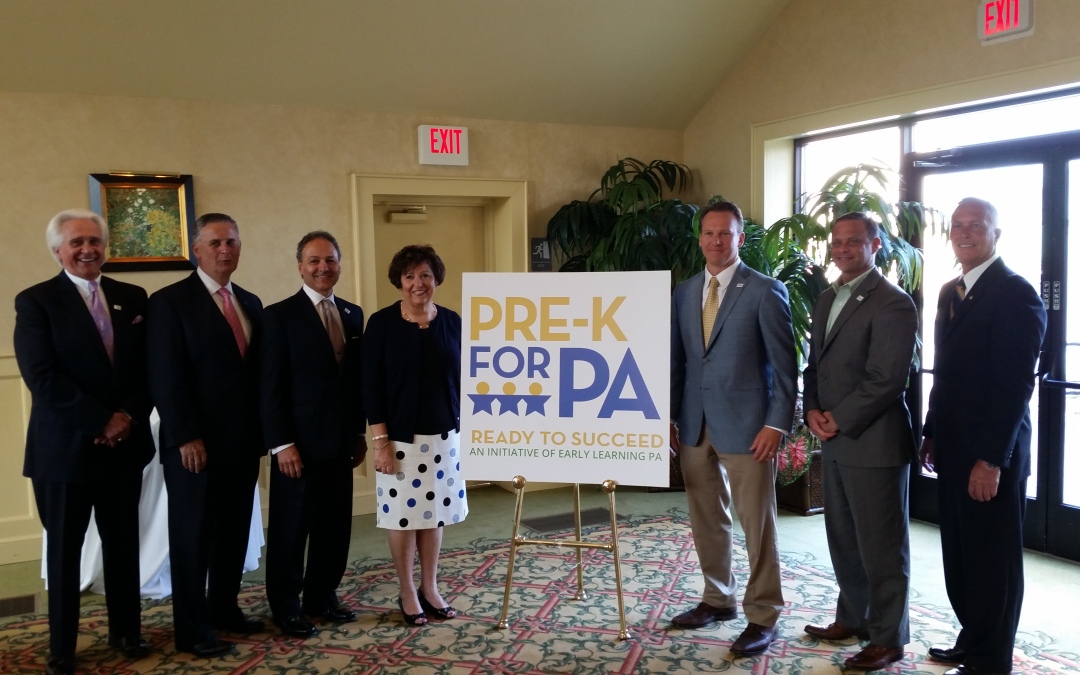
At a regional legislative breakfast in Erie, PA on May 28th, Major General (Ret.) Michael E. Dunlavey – a member of Mission: Readiness – Military Leaders for Kids, a national nonprofit organization of more than 500 retired generals and admirals touted the need to expand pre-k as part of an effort to better prepare our workforce, particularly in the armed services, which is reporting fewer graduates are ineligible to join. The breakfast featured state legislators, local business and community leaders who are working together to advocate for expanded access to pre-k for the thousands of un-served kids in Erie County.
The event received a variety of press including this video from YourErie.com:
Erie Times ran an article Retired General Supports Pre-K Effort in Pennsylvania
Senior Judge Michael Dunlavey, a retired two-star general in the U.S. Army Reserve, said access to early childhood education is connected to the nation’s ability to protect and defend itself.
“We can’t defend America if we don’t have young men and women who are going to be able to lead us through the 21st century,” Dunlavey said Thursday.
In a message aimed at legislators, Dunlavey said, “You have not only the opportunity but the duty to fund these programs. It will save the lives of our children.”
State Sen. Sean Wiley, one of several local legislators who attended the event at the Ambassador Center, said the benefits of investing in pre-K far outweigh the cost of those programs.
“It is no longer an option to do nothing,” said Wiley, D-49th Dist.
Pre-K access is directly tied to economic success, said state Rep. Florindo Fabrizio, D-2nd Dist.
“The social ills of this country could be eradicated by good education,” Fabrizio said. “With quality education comes economic success.”
The issue has drawn bipartisan support, including from state Rep. Curt Sonney, of Harborcreek Township, R-4th Dist. The family structure has changed over the years, making access to quality pre-K necessary, he said.
Read the full article here.
York Dispatch: Op-Ed: Wolf is Right: Invest in Pre-K Now, Not Prisons Later
By JOHN WETZEL
Acting Secretary of Corrections
At a recent budget hearing, a senator asked, “If you were to advise us as to an investment that we should be making in another agency, in another part of government, that would impact what you do, change the outcome of what you do, what would you recommend?”
My answer was easy: early childhood education programs.
As I see it, every time we talk about corrections reform, it really must begin with the realization that improving the chances for children, especially those in our most disadvantaged communities, is not just a great investment financially, but our responsibility and the true answer to improving criminal justice in America.
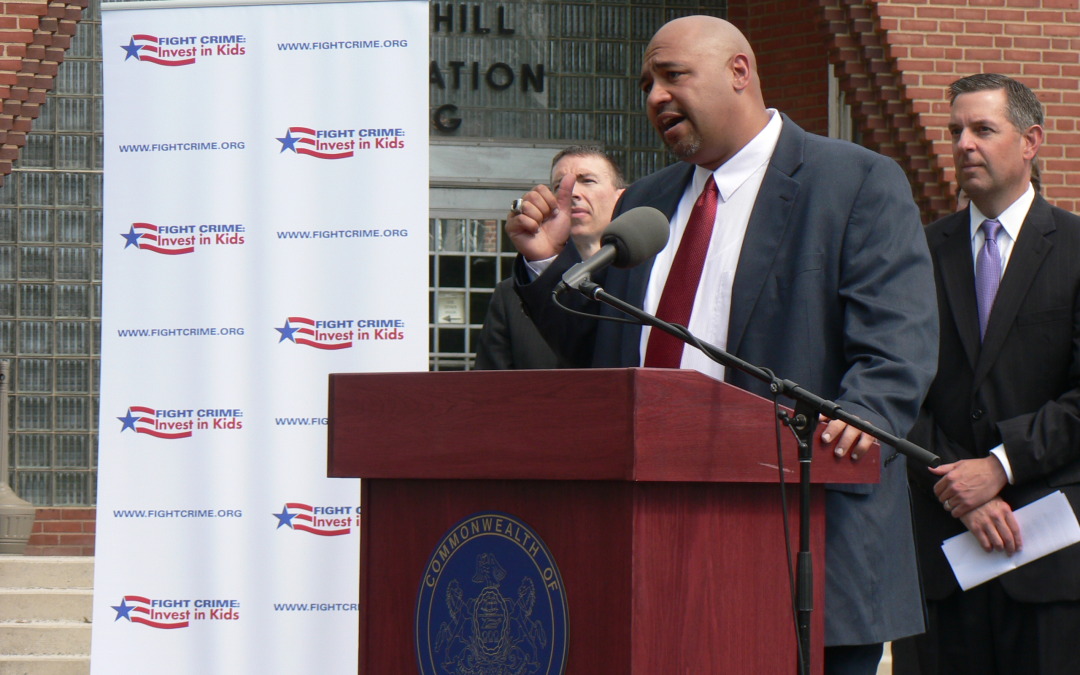
A nonprofit, bipartisan, national anti-crime organization, Fight Crime: Invest in Kids, recently released a new report documenting how Gov. Tom Wolf’s proposed $120 million state funding increase for high-quality pre-kindergarten programs could boost high school graduation rates and, ultimately, reduce the number of people incarcerated in Pennsylvania. Further, the report says that investing in Pre-K now could save taxpayers more than $350 million.
The report makes the case that by the time at-risk children get to kindergarten, many are already behind in vocabulary development, as well as in pre-literacy and pre-math skills. They can also have problems with behavior and impulse control, which makes it hard to get along with other kids and teachers.
The report also cites state and national research studies showing that quality early learning programs have been proven to reduce these disadvantages and, in many cases, eliminate the need for other costly interventions.
As Fredrick Douglass said, “It is easier to build strong children than to repair broken men.”
We already know what the numbers say. High school dropouts, those from low socio-economic, high-poverty neighborhoods, and especially children of color, have a 70 percent lifetime likelihood of being locked up.
Read the full article here.