Bucks County Pre-K for PA Provider Jolly Toddlers Welcomes Rep. Farry at End of Year Event
Southampton, PA (June 3, 2016) – As priorities in the 2016-17 fiscal year budget negotiations are being identified in Harrisburg, Pre-K for PA provider Jolly Toddlers celebrated the end of the school year alongside PA State Representative Frank Farry today.
“The benefits of pre-k learning last a lifetime,” said Rep. Farry. “Investing in quality early learning programs, like Jolly Toddlers, will help us close the achievement gap, increase graduation rates, create productive citizens, and make Pennsylvania a place where all children have access to a quality education.”
Studies show that children who attend high-quality preschool enter kindergarten with better pre-reading skills, richer vocabularies, and stronger basic math skills than those who do not.
Pre-K for PA providers across the state support continued investment in pre-k, and are urging the Pennsylvania legislature and the governor to expand access to thousands of at-risk kids in the final 2016-17 budget. Specifically, they are calling for $90 million in additional funding part of the 2016-17 final state budget.
“A multi-year goal for growing access to high-quality pre-k for all of the income eligible children and begin looking at pre-k affordability issues regarding middle class families must be identified as an urgent priority at the negotiating table this month,” said Jodi Askins, Executive Director, Pennsylvania Association for the Education of Young Children (PennAEYC), a Pre-K for PA Principal Partner.
While the 2015-16 budget investment was a positive step, the fact remains that more than 120,000 income eligible 3- and 4-year-olds do not have access each year due to insufficient funding.
The 2015-16 state budget included $30 million in additional funding for PA Pre-K Counts and Head Start Supplemental Assistance programs – expanding access to more than 6,000 at-risk children. Bucks County has almost 5,400 at-risk 3- and 4-year-olds and a staggering 82 percent of them – 4,446 children – lacked access to publicly funded, high-quality pre-k last year.
Across Pennsylvania, there are more than 175,000 3- and 4-year-olds who are at-risk because they are in lower income households—70 percent of these at-risk young learners – more than 120,000 children statewide – had no access to publicly funded pre-k last year.
Pre-K for PA is an issue campaign supported by individuals and organizations across Pennsylvania who believe that investing in our children is the right choice and an urgent necessity. Its vision is that every 3- and 4-year-old in Pennsylvania will have access to high-quality pre-k. For more information visit www.prekforpa.org.
# # #

PennLive: Is preschool the answer to increasing the future supply of scientists and engineers?
By Jan Murphy June 2, 2016
Those making a case for more state funding for preschool programs often cite a myriad of reasons for this being a wise long-term investment.
It decreases spending on special education and increases graduation rates. It reduces the number of youths entering the criminal justice system. It boosts the number of 17- to 24-year-olds eligible to serve in the military.
Now another reason has come along. A new report links access to preschool to helping businesses and the military fill their future need for workers possessing science, technology, engineering, and math skills.
A Mission Readiness/Ready Nation report, titled “STEM and Early Childhood – When Skills Take Root,” being released on Thursday suggests that there is a growing body of research that indicates that interest in the science, technology, engineering and math fields takes root as early as preschool and kindergarten.
“Young children can learn more STEM content than we may realize,” the report states. “Good early learning curricula capitalize on the natural curiosity and exploration of young children and can build an understanding of math and science concepts.”
The report indicates that early exposure to math is linked to later abilities not only in math but in other subjects. At the same time, children with persistent problems in math at ages 6, 8 and 10 were 13 percentage points less likely to graduate from high school and 29 percentage points less likely to attend college.
The release of this report comes on the heels of last week’s letter to the Legislature from former Republican Gov. Mark Schweiker and Democratic Gov. Ed Rendell and more than six dozen business, law enforcement, education, faith-based, and civic leaders that calls for providing the $90 million increase that Gov. Tom Wolf proposed for preschool in his 2016-17 budget.
An increase of that size would raise the state’s investment in preschool programs to more than a quarter of a billion dollars.
The letter signers see that as an incremental step toward growing access to high-quality pre-k for all income-eligible children and making it affordable to middle-class families as well.
“Such an investment will set us on a path to reduce educational, public welfare, and incarceration costs and have the most important added benefit of ensuring brighter futures for more of the commonwealth’s children,” the letter stated.
With an additional investment of the size the governor is seeking along with the $30 million increase provided this year, some 14,000 more income-eligible three- and four-year-olds could be served, according to Pre-K for Pa, a coalition of groups supportive of expanding access to preschool particularly for at-risk children.
Support for funding for early education stretches across the aisle in the GOP-controlled House and Senate but it seems to come down to a question of whether and how much revenue is there to pay for any increase it might receive.
House Republican spokesman Steve Miskin said any funding that can be raised beyond what is needed to cover the costs to carry the current state budget forward plus mandated cost increases would likely go toward education. However, it’s unclear at this point how any potential additional dollars would be distributed across the various education budget lines.
Read the full article here.
Delaware County Daily Times: Guest Column: Why boosting pre-K spending is a good investment
June 2, 2016
By Francesca Darquea, M.D., Brittany Davis-Schaffer, M.D., and Sam Master, D.O., Times Guest Columnists
In our work in pediatric medicine at the Crozer-Chester Medical Center, we see first-hand how challenges in a child’s growth and development — if left unaddressed — can limit opportunities, including the opportunity to learn.
That’s why we want to see Pennsylvania invest more in high-quality pre-K programs in the state budget. The years before a child enters kindergarten are a critical window for healthy cognitive, physical, social and emotional development, and the circumstances and experiences children have during these early years can shape their health and success for a lifetime. Quality pre-K helps put our children on a path to a lifetime of good health and success.
Unfortunately, too many young children face obstacles that hinder healthy development, including the effects of poverty and other adverse conditions beyond their control, which can fuel “toxic stress” – the type of extreme, persistent stress that can actually alter a child’s brain architecture in negative ways. Research shows one of the most effective ways to lessen the impact of toxic stress is through caring relationships and stable, supportive environments. High-quality pre-K programs provide such an environment, enabling young children to learn and develop free from the adverse conditions that can create persistent stress and anxiety.
High-quality pre-K programs not only prepare children for success in school and in life, but they also have been shown to promote good health in childhood and into adulthood.
Research shows high-quality pre-K improves language, literacy and math skills as children enter kindergarten, reduces special education placements, and increases the likelihood of high school graduation and college enrollment. From a health perspective, children who benefit from high-quality early learning programs tend to have better diets and exercise routines as adults, lower rates of smoking or substance abuse and lower risks of diabetes, stroke or heart disease. These health-related benefits not only help the child, they also help society by lowering health care costs, especially costs from chronic illnesses or disease.
Despite these many benefits for our children and our communities, the majority of 3- and 4-year-olds in Pennsylvania lack access to high-quality pre-K programs. According to the statewide Pre-K for PA campaign, more than 9,300 3- and 4-year-olds in Delaware County alone lack access to high-quality pre-K. We can and should address this unmet need.
That’s why we – along with the Pennsylvania Chapter of the American Academy of Pediatrics – support the call for Pennsylvania leaders to enact a state budget that increases funding for high-quality pre-K by $90 million in fiscal 2016-17 so an additional 7,400 children can benefit.
Read the full column here.
Columbia County Pre-K for PA Provider Columbia Child Development Head Start Welcomes Sen. Gordner at End of Year Event
Bloomsburg, PA (June 1, 2016) – As priorities in the 2016-17 fiscal year budget negotiations are being identified in Harrisburg, Pre-K for PA provider Columbia Child Development Head Start celebrated the end of the school year alongside PA State Senator John Gordner today.
Studies show that children who attend high-quality preschool enter kindergarten with better pre-reading skills, richer vocabularies, and stronger basic math skills than those who do not.
Pre-K for PA providers across the state support continued investment in pre-k, and are urging the Pennsylvania legislature and the governor to expand access to thousands of at-risk kids in the final 2016-17 budget. Specifically, they are calling for $90 million in additional funding part of the 2016-17 final state budget.
“A multi-year goal for growing access to high-quality pre-k for all of the income eligible children and begin looking at pre-k affordability issues regarding middle class families must be identified as an urgent priority at the negotiating table this month,” said Blair Hyatt, Executive Director of the Pennsylvania Head Start Association, a Pre-K for PA Principal Partner.
While the 2015-16 budget investment was a positive step, the fact remains that more than 120,000 income eligible 3- and 4-year-olds do not have access each year due to insufficient funding.
The 2015-16 state budget included $30 million in additional funding for PA Pre-K Counts and Head Start Supplemental Assistance programs – expanding access to more than 6,000 at-risk children. Columbia County has more than 860 at-risk 3- and 4-year-olds and a staggering 68 percent of them – 591 children – lacked access to publicly funded, high-quality pre-k last year.
Across Pennsylvania, there are more than 175,000 3- and 4-year-olds who are at-risk because they are in lower income households—70 percent of these at-risk young learners – more than 120,000 children statewide – had no access to publicly funded pre-k last year.
Pre-K for PA is an issue campaign supported by individuals and organizations across Pennsylvania who believe that investing in our children is the right choice and an urgent necessity. Its vision is that every 3- and 4-year-old in Pennsylvania will have access to high-quality pre-k. For more information visit www.prekforpa.org.
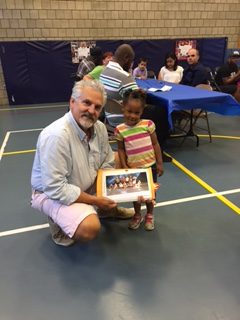
Lancaster County Pre-K for PA Provider REC Child Care Center Welcomes Rep. Sturla at Moving Up Ceremony
Lancaster, PA (June 1, 2016) – As priorities in the 2016-17 fiscal year budget negotiations are being identified in Harrisburg, Pre-K for PA provider Lancaster REC Child Care Center, celebrated the advancement of its pre-k class to kindergarten alongside PA State Representative Mike Sturla today at a Moving Up Ceremony.
Studies show that children who attend high-quality preschool enter kindergarten with better pre-reading skills, richer vocabularies, and stronger basic math skills than those who do not.
“Research shows that investment in early childhood education proves for better outcomes in the future,” Representative Mike Sturla said. “Every one dollar invested has a return rate of $7 and has a significant impact on reducing the need for social services and corrections costs. It’s a critical developmental time for children and the more learning opportunities we provide for them in the early learning stages the less we will have to invest in remedial training and incarceration costs in the future. I unequivocally support investing in early childhood education and commend Lancaster Rec Child Care Center for all they do to get children excited about learning.”
Pre-K for PA providers across the state support continued investment in pre-k, and are urging the Pennsylvania legislature and the governor to expand access to thousands of at-risk kids in the final 2016-17 budget. Specifically, they are calling for $90 million in additional funding part of the 2016-17 final state budget.
“A multi-year goal for growing access to high-quality pre-k for all of the income eligible children and begin looking at pre-k affordability issues regarding middle class families must be identified as an urgent priority at the negotiating table this month,” said Jodi Askins, Executive Director, Pennsylvania Association for the Education of Young Children (PennAEYC), a Pre-K for PA Principal Partner.
While the 2015-16 budget investment was a positive step, the fact remains that more than 120,000 income eligible 3- and 4-year-olds do not have access each year due to insufficient funding.
The 2015-16 state budget included $30 million in additional funding for PA Pre-K Counts and Head Start Supplemental Assistance programs – expanding access to more than 6,000 at-risk children. Lancaster County has more than 9,240 at-risk 3- and 4-year-olds and a staggering 83 percent of them – 7,701 children – lacked access to publicly funded, high-quality pre-k last year.
Across Pennsylvania, there are more than 175,000 3- and 4-year-olds who are at-risk because they are in lower income households—70 percent of these at-risk young learners – more than 120,000 children statewide – had no access to publicly funded pre-k last year.
Pre-K for PA is an issue campaign supported by individuals and organizations across Pennsylvania who believe that investing in our children is the right choice and an urgent necessity. Its vision is that every 3- and 4-year-old in Pennsylvania will have access to high-quality pre-k. For more information visit www.prekforpa.org.