Lancaster Online: Editorial: On this day after the election, we turn our attention to other concerns
November 9, 2016 by LNP Editorial Board
Do you hear that?
The blessed silence, we mean.
No more screaming political ads on the TV and radio. No more heart-poundingly ominous warnings about the fate that awaits us if we don’t vote for a particular candidate.
Let’s enjoy it while it lasts, because campaigning seems to have become the new American pastime, one with an exhaustingly long season and no all-star breaks.
So for just one day at least, let’s turn our attention to the world outside of politics.
It turns out there is one.
The new classrooms will provide spots for 60 students. As LNP reported Tuesday, they were made possible by the inclusion of $30 million in additional pre-K funding in the 2016-17 state budget.
It costs $170,000 to fund a classroom for 20 pre-K students, according to city schools Superintendent Damaris Rau.
But the benefits are enormous.
When you test preschoolers who have attended pre-K, 83 percent are prepared for kindergarten, Rau noted. When you test preschoolers who haven’t attended pre-K, only 37 percent are prepared for kindergarten.
Research shows that 90 percent of brain development takes place in the first five years of a child’s life. How much a child learns in those formative early years — and, in particular, how great is his or her exposure to language — can determine how that child does in school and ultimately in life.
So it’s wonderful that three more pre-K classrooms have opened in Lancaster city. But there’s still a way to go in meeting the early education needs of our children.
Four hundred students in the School District of Lancaster remain on the pre-K waiting list.
Only 17 percent of eligible 3- and 4-year-olds in Lancaster County have access to publicly funded, high-quality pre-K, said Randy Patterson, director of Economic Development and Neighborhood Revitalization for the City of Lancaster and board chair for United Way of Lancaster County.
The implications of failing to provide children with the education they need are far-reaching.
As Lancaster County District Attorney Craig Stedman pointed out, about half of state prison inmates have not graduated from high school. The annual cost of incarcerating someone in state prison is $45,000; incarceration costs the state about $2.3 billion annually.
“I think we’d rather pay for an education than an incarceration,” he said.
We agree. Funding early education is the fiscally smart choice. And it happens to be the morally right one, too — because every child, no matter the ZIP code in which he or she resides, deserves to get the best possible start in life.
Read the editorial here.
Lancaster Online: 3 new pre-K classrooms for Lafayette elementary, leaders push for more funding
By Lindsey Blest
November 8, 2016
Pedro Rivera squatted on a multicolored carpet, chanting an alphabet rap with 20 pre-kindergarten students in a new classroom at Lafeyette Elementary School in Lancaster city.
“When I say ‘K,’ you say ‘kuh,’ ” the Pennsylvania Secretary of Education said.
Rivera joined a panel of local and state leaders at the School District of Lancaster school Monday for a ribbon-cutting ceremony for the new classrooms and a roundtable discussion on pre-K funding.
“The investment in quality early childhood education will ensure that kids are on a trajectory to be successful,” Rivera said.
The three new classrooms provide spots for a total of 60 students. They were made possible by the inclusion of $30 million in additional pre-K funding in the 2016-17 state budget.
“I’m really proud to see great programs happen here at Lafayette,” said Rivera, who was SDL superintendent from 2008 to 2015.
Funding a classroom for 20 pre-K students costs $170,000, according to current SDL Superintendent Damaris Rau.
Testing results have shown that 83 percent of pre-K students are prepared for kindergarten, but only 37 percent are prepared without pre-K, she said.
ldquo;Pre-K education has to become our mission,” Rau said.
There are currently 392 pre-K students in the district with 400 more on the waiting list.
Only 17 percent of eligible 3- and 4-year-olds in Lancaster County have access to publicly funded, high-quality pre-K, said Randy Patterson, director of Economic Development and Neighborhood Revitalization for the City of Lancaster and board chair for the United Way of Lancaster County.
During the roundtable discussion, local leaders discussed the benefit that pre-K education brings to education, crime reduction, the military and business.
“A vital city has to have a vital education program,” Lancaster city Mayor Rick Gray said.
Studies have shown advancement in education, better suitability to society and reduction in crime begins with early education, he said.
Lancaster County District Attorney Craig Stedman said he sees many crime statistics, but the best statistic is “the one I don’t see.”
“I would be happy if the results here put me out of a job,” Stedman said.
Stedman said about half of state prison inmates have not graduated from high school. He added that the annual cost for incarcerating an inmate in state prison is $45,000, and that it currently costs the state about $2.3 billion annually.
“I think we’d rather pay for an education than an incarceration,” he said.
Gov. Tom Wolf pledged to introduce an “ambitious” early childhood education plan in the 2017-18 budget at a round table discussion with state and Philadelphia leaders last week.
While it’s premature to state the total amount Wolf will request, spokesman Jeff Sheridan said, he is committed to continued investment in education at all levels.
“Education is his priority,” Sheridan said. “When we provide access to early childhood education, students perform better in life.”
Read the full article here.
Lancaster Online: 3 new pre-K classrooms for Lafayette elementary, leaders push for more funding
November 8, 2016
Pedro Rivera squatted on a multicolored carpet, chanting an alphabet rap with 20 pre-kindergarten students in a new classroom at Lafeyette Elementary School in Lancaster city.
“When I say ‘K,’ you say ‘kuh,’ ” the Pennsylvania Secretary of Education said.
Rivera joined a panel of local and state leaders at the School District of Lancaster school Monday for a ribbon-cutting ceremony for the new classrooms and a roundtable discussion on pre-K funding.
The three new classrooms provide spots for a total of 60 students. They were made possible by the inclusion of $30 million in additional pre-K funding in the 2016-17 state budget.
“I’m really proud to see great programs happen here at Lafayette,” said Rivera, who was SDL superintendent from 2008 to 2015.
Funding a classroom for 20 pre-K students costs $170,000, according to current SDL Superintendent Damaris Rau.
Testing results have shown that 83 percent of pre-K students are prepared for kindergarten, but only 37 percent are prepared without pre-K, she said.
ldquo;Pre-K education has to become our mission,” Rau said.
There are currently 392 pre-K students in the district with 400 more on the waiting list.
Only 17 percent of eligible 3- and 4-year-olds in Lancaster County have access to publicly funded, high-quality pre-K, said Randy Patterson, director of Economic Development and Neighborhood Revitalization for the City of Lancaster and board chair for the United Way of Lancaster County.
During the roundtable discussion, local leaders discussed the benefit that pre-K education brings to education, crime reduction, the military and business.
“A vital city has to have a vital education program,” Lancaster city Mayor Rick Gray said.
Studies have shown advancement in education, better suitability to society and reduction in crime begins with early education, he said.
Lancaster County District Attorney Craig Stedman said he sees many crime statistics, but the best statistic is “the one I don’t see.”
“I would be happy if the results here put me out of a job,” Stedman said.
Stedman said about half of state prison inmates have not graduated from high school. He added that the annual cost for incarcerating an inmate in state prison is $45,000, and that it currently costs the state about $2.3 billion annually.
“I think we’d rather pay for an education than an incarceration,” he said.
Gov. Tom Wolf pledged to introduce an “ambitious” early childhood education plan in the 2017-18 budget at a round table discussion with state and Philadelphia leaders last week.
While it’s premature to state the total amount Wolf will request, spokesman Jeff Sheridan said, he is committed to continued investment in education at all levels.
“Education is his priority,” Sheridan said. “When we provide access to early childhood education, students perform better in life.”
Read the story here.
Lancaster Mayor, County Officials Host PA Education Secretary Pedro Rivera for Pre-K Roundtable; Opening of New Pre-K Classrooms
Advocates Urge Continued Investment
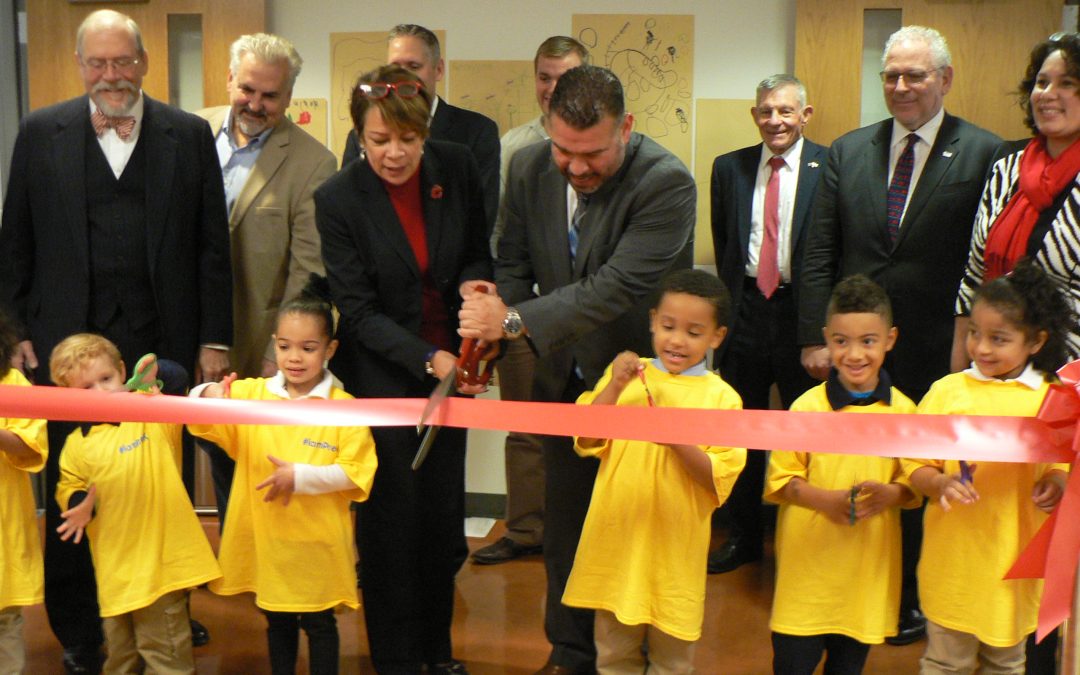
Lancaster, PA – Pennsylvania Secretary of Education, Pedro Rivera joined Lancaster Mayor Rick Gray alongside state, county and local officials for a roundtable discussion on pre-k today. Officials took the opportunity to mark the statewide expansion of a pre-kindergarten with a ribbon cutting ceremony in the new pre-k classrooms at Lafayette Elementary School.
“As we invest in the education of our children, we are investing in our city’s future,” said Lancaster Mayor Rick Gray. “Pre-k programs are backed by decades of research showing that children who attend have a more positive trajectory in life. This means more kids finishing high school, getting a job, less reliance on social services and less crime in our community.”
The expansion of high-quality pre-k was made possible by the infusion of an additional $25 million in funding for Pennsylvania Pre-K Counts and $5 million for the Head Start Supplemental Assistance Program in both the state’s 2015-16 and 2016-17 budgets. Lancaster County early learning providers received new funding for more than 320 expansion seats. Pre-K Counts and the Head Start State Supplemental are the primary state funding sources for high-quality pre-k in Pennsylvania.
Randy Patterson, Director of Economic Development & Neighborhood Revitalization for the City of Lancaster and Board Chair for the United Way of Lancaster County, noted that the added capacity to high-quality pre-k is welcome news as only 17 percent of income eligible 3- and 4-year-olds in Lancaster County have access to publicly funded high-quality pre-k.
“While I join you to celebrate this new classroom, I must be clear that we still have a lot of work to do,” said Patterson. “More than 7,700 income eligible three- and four-year-olds in Lancaster County still lack access to this once-in-a-lifetime learning opportunity.”
More than 120,000 eligible children, or 69 percent of all three- and four-year-olds, across the commonwealth lack access to publicly funded, high-quality pre-k each year.
Robert M. Krasne, Chief Executive Officer of Steinman Communications and member of PA’s Early Learning Investment Commission, noted that Pennsylvania is experiencing a shortage of qualified workers. An effective and comprehensive pre-k program is a way to begin to address that shortage.
“A recent survey from the statewide chamber of business and industry showed that more than half of the 400+ Pennsylvania employers who were surveyed reported trouble finding people with adequate skills, training, or education. This was especially true of technical and skilled job openings,” said Krasne. “The proven benefits of pre-k establish that developing a competent workforce should start at a young age. The lack of access statewide to pre-k is particularly troubling.”
Mr. Krasne referenced a large body of research that shows children who benefit from high-quality pre-k:
- Enter kindergarten with stronger literacy, language, math and social/emotional skills;
- Are less likely to need special education services, less likely to repeat grades, and more likely to graduate and enroll in college.
- Over a lifetime, these young learners will see stronger employment opportunities and increased earning potential, and they are less likely to commit juvenile and adult crimes.
Lancaster County District Attorney Craig Stedman stressed the role high-quality pre-k plays in reducing disruptive or anti-social behaviors that, if unaddressed, can lead to delinquent and criminal behavior later in life.
“A review of Pennsylvania’s state inmate population reveals that more than 50 percent of inmates have not graduated from high school,” Stedman commented. “This revealing statistic is more reason for the imperative that law enforcement leaders place on educational success, which is best achieved by children getting a strong early educational foundation.”
Retired Army Lieutenant General Dennis Benchoff of Lancaster informed the group that the military is also concerned about a future qualified workforce and its potential impact on national security.
“Unfortunately, we know we have our work cut out for us,” said Lt. Gen. Benchoff. “According to the Department of Defense, 72 percent of Pennsylvania’s 17-24 year-olds are not eligible for military service due to inadequate education, a criminal record, or obesity or other health condition. In this way, an unqualified workforce has real national and economic security concerns for the future. It’s my hope that Pennsylvania continues to prioritize early learning.”
Also participating in the event were State Representative Bryan Cutler; State Representative Mike Sturla; Deputy Secretary Suzann Morris, Office of Child Development and Early Learning; Lancaster Police Chief Keith Sadler; Dr. Damaris Rau, Superintendent for the School District of Lancaster; Karen Wynn, Coordinator of School Improvement and Federal Programs, School District of Lancaster; Andrea Heberlein, Lead Director of Community Impact, United Way of Lancaster County; and Dr. Jill Koser, Education & Child Development Impact Team Leader, Community Action Partnership.
Pre-K for PA is an issue campaign supported by thousands of individuals and organizations across Pennsylvania who believe that investing in our children is a necessary and urgent priority. Fight Crime: Invest in Kids is one of 10 founding partners. For more information, visit prekforpa.org.
Philly.com: Commentary: PA Can Invest in Children and the Nation
October 21, 2016
By Mark Schweiker and William B. Lynch
This election season might feel more raucous than any in U.S. history, but at the heart of all campaigns are the issues that never change. Since this nation was founded, Americans have gone to the polls because they want better lives for themselves and bright futures for their children.
Those who have spent time in public service and the armed forces are acutely aware that we have a duty to help all children achieve their potential as productive, contributing citizens.
However, if we merely hope that children grow up to be tomorrow’s leaders and innovators, we’re gambling on an issue critical to this nation’s survival. As the Council for a Strong America has found, too many children are unprepared for the workforce, unqualified for the military, and mired in crime at a young age.
The council is a national, bipartisan nonprofit that unites five organizations comprising law enforcement leaders, retired admirals and generals, business executives, pastors, and prominent coaches and athletes. Together, we promote solutions that ensure our next generation of Americans will be citizen-ready, and to mark its 20th year, the council has just released the 2016 Citizen-Readiness Index.
Citizen-readiness encompasses the positive capabilities and traits acquired in childhood that lay the groundwork for productive adulthoods. This report reveals those junctures where children fall short of their potential – perhaps with lifelong consequences – and offers research-based solutions grounded in early childhood to assure that kids start life on a productive path, and stay there.
The index grades states on their performance, and if this were a child’s report card, many states would go to bed without supper. More than three-quarters of states earned a grade of C or worse. Sadly, Pennsylvania earned a D. The Keystone State nearly fails on the three criteria of citizen readiness:
13 percent of youth ages 16 to 24 are unemployed and not in school. What are they doing with their time? Certainly not learning new skills to improve their employability and earning power.
13 youth out of 100 ages 17 to 24 have an arrest record. This early entanglement with the criminal justice system can create a damaging ripple effect for years to come.
72 percent of youth ages 17 to 24 are ineligible for military service due to problems with obesity, education, drug abuse, or crime. The implications are sobering. Our nation cannot rely on three out of four young Pennsylvanians to serve their country. As retired Air Force Maj. Gen. Mike Hall said, “It begs the question, if you aren’t qualified to serve in the military, what else are you not qualified to do?”
Fortunately, the index recommends a solution – investments in research-based policies to assure that children start strong and grow up healthy.
First, we can support strong families through expanding resources for evidence-based home visiting services. These voluntary programs send trained professionals into the homes of vulnerable new parents to educate them on health, nutrition, learning opportunities, and appropriate discipline. Evidence shows that home-visiting programs reduce incarcerations of mothers and their daughters, boost family self-sufficiency, and improve children’s learning abilities.
Second, we can further advance early education. Preparing children for success in school improves their future qualifications for good jobs and military service, while it also deflects involvement in crime. Unfortunately, more than 120,000 of Pennsylvania’s eligible 3- and 4-year-olds still lack access to PA Pre-K Counts and state-funded Head Start.
Pennsylvania has a long history of supporting early learning. It began in the Schweiker administration with an Early Childhood Care and Education Task Force that led to the establishment and growth of pre-k opportunities under Govs. Ed Rendell and Tom Corbett. Most recently under Gov. Wolf, quality pre-k saw the single largest expansion since its inception. In each instance, legislators joined Pennsylvania’s governors in making this a priority for the commonwealth.
This is not the time to halt our momentum. We must continue our commitments to early childhood in order to build entire generations capable of joining the workforce, avoiding crime, and serving in the U.S. armed forces.
Supporting further investments in prekindergarten and home-visiting programs, helps to ensure that all children have the brightest future we can provide. It’s also a commitment to the security and economic vitality of our communities and commonwealth.
Mark Schweiker is a former governor of Pennsylvania. mschweiker@strongnation.orgRetired Air Force Maj. Gen. William B. Lynch is the former adjutant general of the Pennsylvania National Guard. wlynch@missionreadiness.org
Read the op-ed here.
Centre Daily Times: LTE: A Step in the Right Direction
October 16, 2016
As a longtime advocate for early learning opportunities for our region’s children, I was very excited to learn that more than 6,000 additional children throughout the commonwealth of Pennsylvania will be enrolled in high-quality pre-K programs this fall due to increased funding in this year’s state budget.
Locally, this will allow almost 50 more children ages 3 and 4 in Centre County to attend preschool. Although more than 1,300 of the county’s eligible children remain unserved due to funding constraints, this is a step in the right direction.
I am proud of state Sen. Jake Corman, who has supported greater access to high-quality early education. I hope greater access to pre-K and Head Start is a consistent theme of our state’s budgets in the years to come.
EILEEN WISE, PORT MATILDA
The writer is president of the Nittany Kiwanis Club.
Read more here: http://www.centredaily.com/opinion/letters-to-the-editor/article108672597.html#storylink=cpy