PennLive: Governor Wolf hosts Easter Egg hunt for pre-k students
April 17, 2017 by Mark Pynes
Under a bright blue sky, Gov. Tom Wolf and first lady Frances Wolf hosted several dozen prekindergarten students and their families on the lawn of the Governor’s Residence in Harrisburg for an Easter egg hunt Monday.
“Frances and I are excited to host Harrisburg-area preschoolers at the Governor’s Residence today,” Wolf said.
“I (have) called for a state budget that includes an increase of $75 million for pre-K, which will allow for more than 8,400 additional children to enroll in Pennsylvania Pre-K Counts and the Head Start supplemental assistance programs,” he said.
Read the article and see all the photos here.
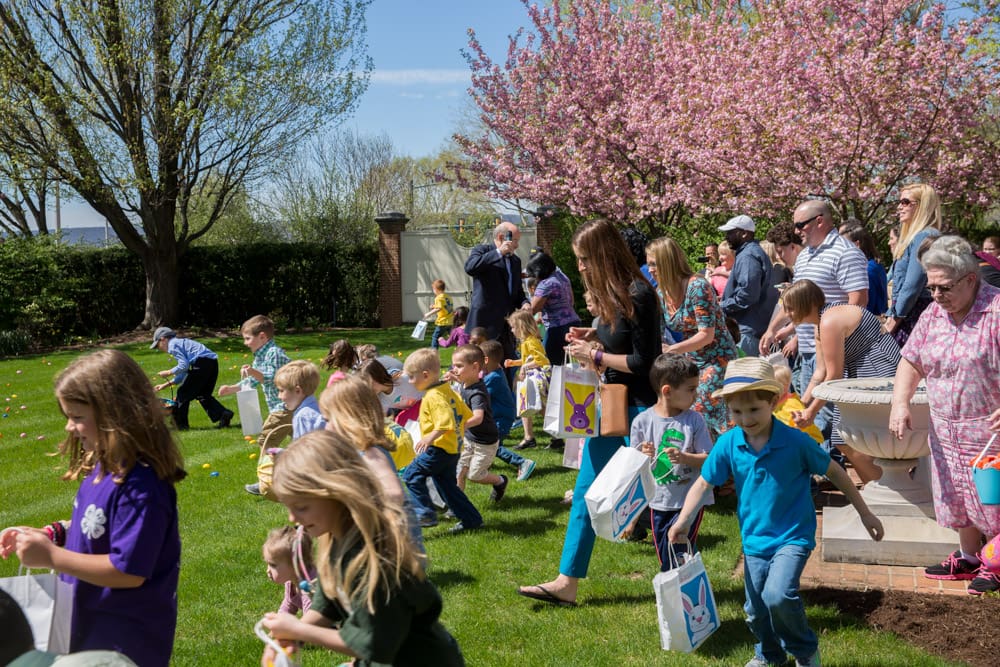
Governor Tom Wolf and First Lady Frances Wolf Join Pre-K for PA to Host Easter Egg Hunt at the Governor’s Residence, Highlight the Need to Invest in High-Quality Early Childhood Education
Harrisburg, PA – Governor Tom Wolf and First Lady Frances Wolf were joined today by preschoolers from Harrisburg-area pre-kindergarten centers and members of the Pre-K for PA campaign for an Easter Egg Hunt at the Governor’s Residence in Harrisburg. During the event, the Governor reiterated his commitment to investing in high-quality early childhood education.
“Frances and I are excited to host Harrisburg-area preschoolers at the Governor’s Residence today,” said Governor Wolf. “These children – and thousands of others like them from across Pennsylvania – are counting on us in Harrisburg to ensure that high-quality pre-kindergarten programs are available to them in their communities. That is why I called for a state budget that includes an increase of $75 million for pre-k, which will allow for more than 8,400 additional children to enroll in Pennsylvania Pre-K Counts and the Head Start Supplemental Assistance Program. The stronger the investment in high-quality early learning the greater the return – for our children and our commonwealth.”
Studies show that children who participate in high-quality pre-kindergarten perform better in school, graduate at higher rates and earn more throughout their working lives compared to peers that do not have access to early learning programs. Additionally, children who were previously enrolled in Pre-K Counts outperform their economically disadvantaged peers in third-grade math and reading.
The Pre-K for PA campaign lauded Governor Wolf for his commitment to expanding access to high quality pre-k to more Pennsylvania three- and four-year-olds: “Research continues to show that pre-k can make a difference – it can reduce grade repetition, special education placements, dropout rates, and ultimately save the commonwealth money,” said Jodi Askins, Executive Director of PennAEYC and principal partner of Pre-K for PA. “Governor Wolf’s steadfast commitment to investing in an early education system that provides access to 8,400 more Pennsylvania children this year is further evidence that he gets the value of pre-k and has Pennsylvania’s future as a top priority.”
Fair and increased education funding for all Pennsylvania schools continues to be one of Governor Wolf’s top priorities to ensure students are college and career ready.
The future of Pennsylvania depends on making investments in what matters most. In this year’s budget, Governor Wolf is proposing an additional $209 million increase in education funding. Our commonwealth is facing a serious budget deficit, but by reducing government bureaucracy and finding cost-savings, we can continue to invest in our children’s futures so we can make Pennsylvania stronger.
The 2017-18 budget investments in education include:
* $100 million increase in Basic Education Funding. Following $415 million in basic education and Ready to Learn Block Grant funding increases over the past two fiscal years, this increase will be distributed through the Basic Education Funding Formula, providing an equitable and predictable allocation to school districts across the commonwealth.
* $25 million increase in Special Education Funding. This increase, allocated to school districts through the formula adopted by the bipartisan legislative Special Education Funding Commission, builds upon a $50 million increase over the last two years.
* $75 million increase in high-quality early childhood education. Children who participate in high-quality pre-k programs perform better in school, graduate at higher rates and earn more throughout their lives compared to peers without access to early learning programs. Building upon $60 million in additional investment over the past two years, this nearly 40 percent increase in funding will allow more than 8,400 additional children to enroll in Pennsylvania Pre-K Counts and the Head Start Supplemental Assistance Program.
* $8.9 million increase for the 14 universities of the Pennsylvania State System of Higher Education. The governor will continue to work with PASSHE to develop individual college plans that address performance, affordability, and accountability, while partnering with employers to create structured career pathways.
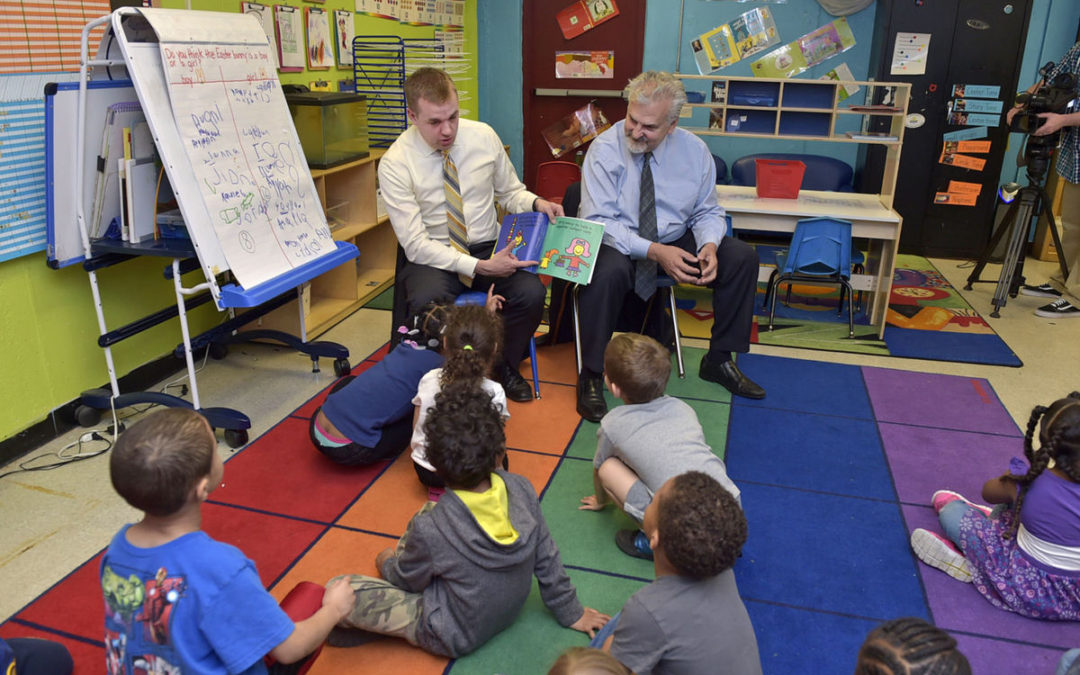
LancasterOnline: Sturla, Cutler receive 2017 Pre-K Champion awards for efforts supporting early childhood education investments
April 18, 2017 by Jonas Fortune
Two Pennsylvania lawmakers from Lancaster County were honored Monday for their support to expand investment in early childhood education across the state.
Pre-K for PA, a statewide campaign to bolster early childhood education, honored Democratic state Rep. Mike Sturla and Republican state Rep. Bryan Cutler with its 2017 Pre-K Champion award at an event at Lancaster Recreation Commission.
Pre-kindergarten education focuses on the developmentally sensitive ages of 3 and 4 as children prepare socially and cognitively for life and school, said Bruce Clash, state director of Fight Crime: Invest in Kids and a Pre-K for PA advocate.
“High-quality pre-K involves a highly qualified teacher with a bachelor’s degree that understands child development, that can identify kids with learning disabilities,” Clash said. “Identifying them and getting them the help they need early gets them back on grade level with their peers later on.”
However, budgetary issues have limited the number of children who can participate in state-funded programs, Clash said.
Gov. Tom Wolf’s 2017-18 $32.3 billion state budget proposal includes $65 million in additional funding for the Pre-K Counts program and an additional $10 million for the Head Start Supplemental Assistance program.
State House Republican leaders countered Wolf’s spending plan with a $31.5 billion budget proposal that trims the governor’s proposed additional $75 million for early childhood education to $25 million.
Sturla is the Democratic policy committee chairman, and Cutler is the House majority whip.
Statewide, of the 300,460 3- and 4-year-olds who live in Pennsylvania, 112,900 of those who are eligible do not have access to the 2,431 eligible state-funded pre-K locations, according to Pre-K for PA.
Of the 1,940 3- to 4-year-olds who live in Sturla’s 96th District, 828 of those who are eligible do not have access to the 19 eligible state-funded pre-K locations in Lancaster city, according to Pre-K for PA.
“This isn’t really a matter of there aren’t enough facilities. The facilities just can’t afford to do it for free,” Sturla said.
“It’s going to cost some money now and going to cost some money for 20 years,” Sturla said. “But in the end, that payoff is such that we can pay for it with saved prison costs, additional revenue from people actually getting decent jobs and being trained and well-educated and well-adjusted to community and socialization and things like that.”
In Cutler’s 100th District in southern Lancaster County, of the 1,878 3- to 4-year-olds who live there, 1,330 of those who are eligible do not have access to its four eligible state-funded pre-K locations, according to Pre-K for PA.
“The truth is, even though some folks may qualify for it, they may not want to participate in it,” Cutler said. “Perhaps they use a different program that is not state-qualified, but is run through their church or something like that.
“We have to recognize that everybody might have a different direction they want to go in,” he said. “Be mindful of that, but for the kids who want that opportunity, we should do our best to work toward that.”
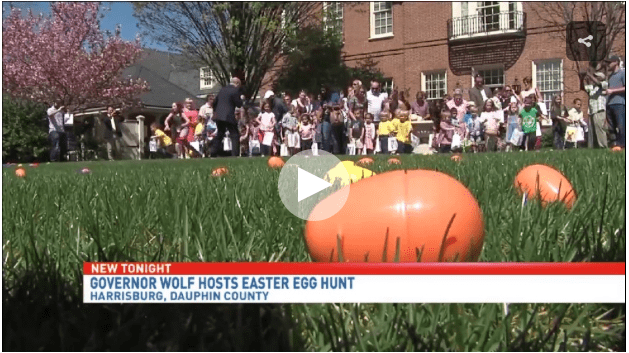
CBS 21: Gov. Wolf and First Lady Host Easter Egg Hunt
HARRISBURG, Pa — Easter celebrations continued on Monday at the PA Governor’s Residence.
Governor Tom Wolf and First Lady Frances Wolf hosted an Easter Egg Hunt with area preschoolers.
Dozens of little ones scoured the governor’s lawn in search of brightly-colored eggs. Today’s event was cohosted by Pre-K for PA, a campaign that strives to provided high-quality early childhood education.
“We’re looking for priorities, where we are going to get the best return for investments of taxpayer dollars and early childhood education is the best it’s going to be. I don’t think there’s anything that is more important.”
The event also included a petting zoo with several of the Easter Bunny’s friends.
See the video here.
Public News Service: House Bill Shortchanges PA Kids, Education Advocates Say
April 6, 2017 by Andrea Sears
HARRISBURG, Pa. – A budget bill passed by the state House of Representatives on Tuesday falls far short of adequately funding Pre-K and child care, according to early learning advocates.
In his budget proposal, Gov. Tom Wolf calls for a $75 million increase in funding for high quality Pre-K.
But according to Jodi Askins, executive director of the Pennsylvania Association for the Education of Young Children and principal partner of Pre-K for PA,
House Bill 218 would increase that funding by only $25 million.
“And in child care, the House actually cut about $28 million from what the current appropriations are, and the governor had proposed an increase,” she points out.
Wolf had proposed a $35 million increase in child care funding.
Askins says the governor’s proposed expansion of Pre-K would serve more than 8,400 children who are qualified for state funded Pre-K but aren’t getting it.
“Obviously, that is still a far cry from the 113,000 children that are still in need of access, but at least it is a significant step forward,” she states.
The Pre-K for PA campaign is calling for a state investment of about $400 million in Pre-K over the next three to four years.
Askins points out that every dollar invested in high quality Pre-K produces up to $17 in long term savings and benefits, beginning with greater success in school.
“We see increased success in high school graduation, decrease in remediation and juvenile delinquency, and higher rates of individuals who graduate from high school that also then go on to college,” she states.
Pre-K for PA is asking the legislature to include Wolf’s proposed increases for Pre-K and child care in the final budget.
Read the article here.