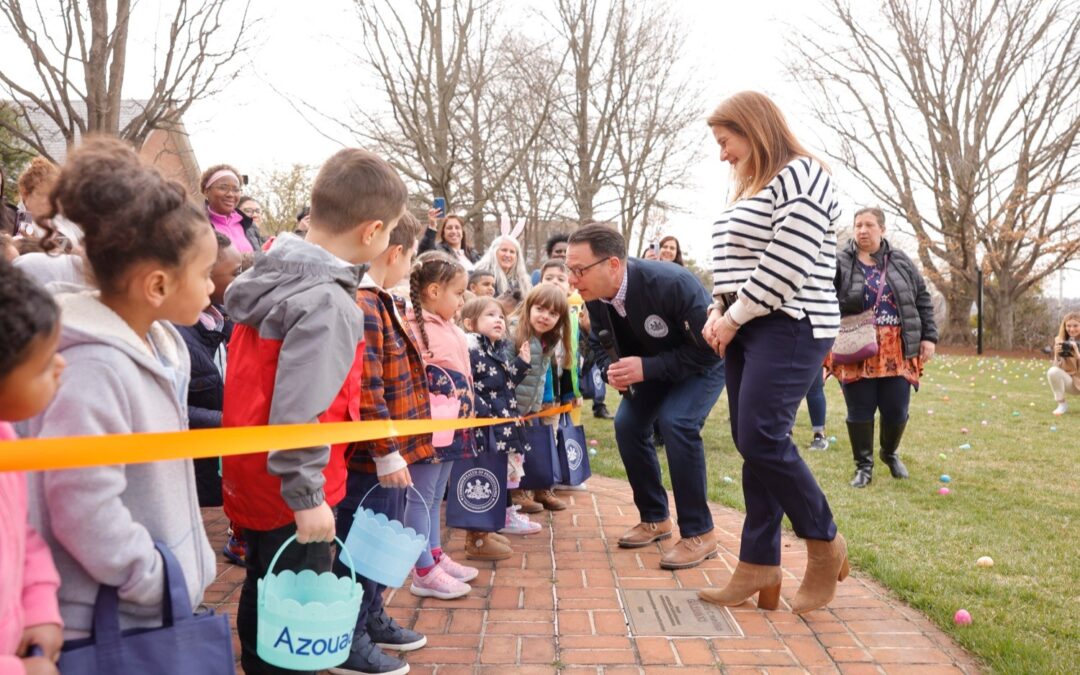
Harrisburg, PA (March 26, 2024) – Today, Governor Josh Shapiro and First Lady Lori Shapiro hosted high-quality pre-k classrooms from across the commonwealth at the annual Easter egg hunt at the Governor’s Residence. Preschool students from Montgomery County Intermediate Unit in Norristown, Summit Early Learning in Mifflinburg, and Touching the Future in Fleetwood were in attendance for the festivities.
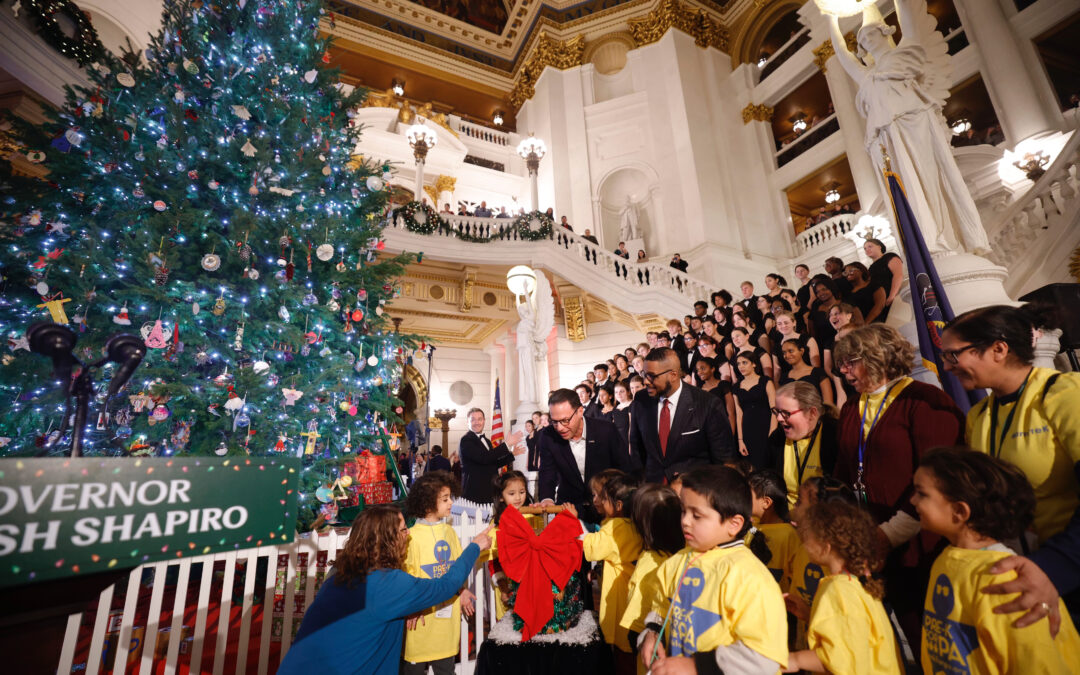
Pre-K Students Join Governor Shapiro and Lieutenant Governor Davis at Tree-Lighting Ceremony
Adorn PA Capitol Christmas Tree with Hand-crafted Ornaments
HARRISBURG (December 5, 2023) — The Pre-K for PA campaign joined Governor Shapiro and Lieutenant Governor Davis at the Pennsylvania Capitol tree lighting ceremony to mark the official start of the holiday season today. The 20-foot Douglas Fir Christmas tree from Crystal Springs Tree Farm in Lehighton, Carbon County, was decorated by pre-k students from all corners of the commonwealth who crafted hundreds of original ornaments.
Joining Governor Shapiro for the tree lighting ceremony was staff, students, and families from Community Action Partnership of Lancaster County – Millersville University Thrive to Five Classroom and Pre-K for PA supporting organizations.
“Every year, our holiday wish is for lawmakers to make serious investments in early care and education for Pennsylvania’s children and families,” said Jen DeBell, Executive Director of the Pennsylvania Association for the Education of Young Children (PennAEYC), a principal partner of Pre-K for PA. “Each and every child deserves the opportunity to begin their educational journey on the right foot. High-quality, publicly funded pre-k is an essential component of the early care and education continuum. Child care is also needed so families can work, with an estimated 68% of young children in Pennsylvania having all available caregivers in the workforce. Pennsylvania’s children and their families deserve access to high-quality child care and pre-k.”
Today, only 43 percent of eligible children in Pennsylvania have access to high-quality pre-k. Yet, a February 2023 Susquehanna Polling and Research poll showed that 98% of PA voters believe that early learning is important, and 78% of PA voters support increasing state funding to serve more eligible children in pre-k programs, which was an increase from 65% in 2022.
Additionally, a study by the University of North Carolina Chapel Hill confirmed that the Commonwealth’s investment in pre-k is paying dividends for the children fortunate enough to access pre-k through Pennsylvania’s Pre-K Counts program. In language and math skills, the study showed that these kids outperformed their kindergarten peers who did not enjoy access – an advantage that equated to four to five months of learning gains, which is a substantial difference in development at that age.
Pre-K for PA is an issue campaign supported by individuals and organizations across Pennsylvania who believe that investing in our children is the right choice and an urgent necessity. Our vision is that every 3- and 4-year-old in Pennsylvania will have access to high-quality pre-k. For more information www.prekforpa.org.
###

HARRISBURG, PA (July 6, 2023) – Today, the principal partners of Early Learning Pennsylvania (ELPA), a statewide coalition of advocates focused on supporting young Pennsylvanians from birth to age five, issued the following statements regarding House Bill 611 that still awaits the signature of the Senate President Pro Tempore and finally Governor Shapiro to become the enacted 2023-24 Pennsylvania state budget. ELPA operates four issue-based advocacy campaigns: Pre-K for PA, Start Strong PA, Childhood Begins at Home and Thriving PA.
First Budget in a Decade to Not Expand Pre-K Counts and State Funding for Head Start
“The Pre-K for PA campaign is deeply disappointed by the failure to expand the state’s publicly funded pre-k programs – PA Pre-K Counts and the Head Start Supplemental Assistance Program. When nearly 90,000 eligible 3- and 4-year-olds do not have access to these once-in-a-lifetime early learning opportunities, and pre-k and Head Start programs can’t keep teachers in their classrooms because of inadequate reimbursement rates, this budget bill is simply unacceptable.
“Public investment in high-quality pre-k has historically been a consensus issue in Pennsylvania; aligning political parties, rural, urban and suburban communities, and families across the commonwealth on a once-in-a-lifetime opportunity that improves the life chances of Pennsylvania’s children. In fact, a February 2023 Susquehanna Polling and Research poll showed that 98% of PA voters believe that early learning is important, and 78% of PA voters support increasing state funding to serve more eligible children in pre-k programs, which was an increase from 65% in 2022.
“Unfortunately, HB 611 is a noticeable departure from a decade of growing investment in high-quality pre-k and threatens the stability of the early care and education sector and the futures of the 90,000 young children that lack access.
“With no new funding and all PA Pre-K Counts contracts up for renewal as part of a complete competitive rebid in FY 2023-24, Pre-K for PA urges the Shapiro Administration to maintain (to the greatest degree possible) the current per county slot allocation to ensure stability in access for our youngest learners.”
Budget Fails to Address Historic Labor Shortage; Continues Child Care Crisis Impacting Working Families
“With a child care sector that is on the brink of collapse, the Start Strong PA Campaign is shocked by the lack of investment to address the child care teacher shortage in the state budget bill. Policymakers ignored calls from chambers of commerce, working parents, child care providers, military leaders and others to stabilize the sector by investing in child care wages. Failing to invest in the workforce, which supports all other sectors, will continue to harm the commonwealth’s children, working families and the overall economy.
“HB 611 currently allocates slightly more than $100 million in new state funding to maintain the status quo in the child care system. This includes supporting the current child care subsidy caseload and utilization, as well as maintaining the increase in subsidy rates as one-time federal funding lapses. While maintaining the 60th percentile of market rates is important to help alleviate inflationary pressures on child care providers, it has not stabilized the child care workforce. This maintenance of effort of the subsidy system is simply woefully inadequate given the scale of the commonwealth’s child care crisis.
“Across Pennsylvania, child care providers are closing classrooms and entire programs due to this historic child care teacher shortage. According to a February 2023 Start Strong PA survey of more than 1,000 child care providers across the state, 85% of responding providers had open and unfilled positions amounting to more than 3,600 open staff positions resulting in 1,500 closed classrooms, and a combined waitlist of more than 35,000 children.
“Low wages within the child care sector are driving this staffing shortage. The average wage of a Pennsylvania child care teacher is less than $12.50/hour. At this earning potential, 21 percent of the child care workforce relies upon Medicaid for their health care coverage and SNAP to put food on the table. There is no county in the commonwealth where this wage covers the cost of living.
“For families with young children, access to child care is a critical factor in their ability to go to work and ensure their children are in a safe and nurturing environment. Nearly 70 percent of all households with children younger than age 6 have all available caregivers in the workforce—that’s over 537,000 households.
“For all other business sectors, the child care sector is the workforce behind the workforce. When families can’t get child care, their children suffer, their income drops and the state’s economy is shortchanged. In a time of severe labor shortages and billions in state budget surplus, the commonwealth’s failure to ensure parents have access to child care is a tragic outcome.
“For all Pennsylvanians, when businesses aren’t fully staffed, or staff are unreliable due to lack of child care, they cannot produce goods or provide services, creating shortages and increasing prices. So, whether one has young children or not, Pennsylvania’s child care crisis should matter to all of us.”
Infant and Toddler Early Intervention and Maternal Health Increases Included in Budget
“The budget bill also contains an increase of $15.4 million for Infant and Toddler (Part C) Early Intervention in the Department of Human Services budget. This is short of Governor Shapiro’s March budget proposal, which called for a $20.2 million increase. While the additional $15.4 million will serve more children and sustain a rate increase initially achieved through one-time federal stimulus funding, Thriving PA is disappointed more was not done to support the Early Intervention system holistically. This includes solutions to address workforce shortages needed to create a viable and sustained service delivery platform.
“Additionally, Preschool (Part B) Early Intervention received a $10.4 million increase in the Department of Education budget, which was what Governor Shapiro included in his March request.
“A $2.3 million increase in the Department of Health budget was included in HB 611 in order to implement recommendations included in the Maternal Mortality Review Commission report. Thriving PA appreciates support for these funds, which will help address maternal mortality and morbidity in Pennsylvania.”
In summary, House Bill 611, which still awaits the signature of the Senate President Pro Tempore and finally Governor Shapiro to become the enacted 2023-24 Pennsylvania state budget, includes:
- Level funding for the state’s Pre-K Counts program.
- Level funding for the Head Start Supplemental Assistance Program.
- Increase of $103,747,000 to maintain the status quo in the child care subsidy program (increases of $13,370,000 million for the state Child Care Assistance line item and $90,377,000 million for the Child Care Services line item).
- Level-funding for evidence-based home visiting in the Community-Based Family Center line item and $25,000 for the Nurse-Family Partnership line item, which is a technical adjustment from previously enhanced federal matching funds.
- $15.4 million for the Early Intervention Part C (infants and toddlers) program through DHS.
- $10.4 million for the Early Intervention Part B (age-three-to-five) program through PDE.
About Pre-K for PA
Pre-K for PA launched in 2014 with the vision that every 3- and 4-year-old in Pennsylvania will have access to high-quality pre-k. Learn more at www.prekforpa.org.
About Start Strong PA
Start Strong PA launched in 2019 to support healthy child development, working families, and the economy by increasing access to and affordability of high-quality child care programs for young children. Learn more at www.startstrongpa.org.
About Childhood Begins At Home
Childhood Begins At Home is a statewide campaign launched in 2017 to help policymakers and the public understand the value of evidence-based home visiting and support public investments in the programs. Learn more at www.childhoodbeginsathome.org.
About Thriving PA
Thriving PA is a perinatal and child health campaign launched in 2021 and is working to ensure each birthing person, infant, and toddler in Pennsylvania has the opportunity for affordable, quality health care access. Learn more at www.thrivingpa.org.
FOR IMMEDIATE RELEASE:
Kate Philips (Pre-K for PA)
philips@parkerphilips.com
215-850-4647
Jodi Askins (Start Strong PA)
jodiaskins@gmail.com
272-444-1860
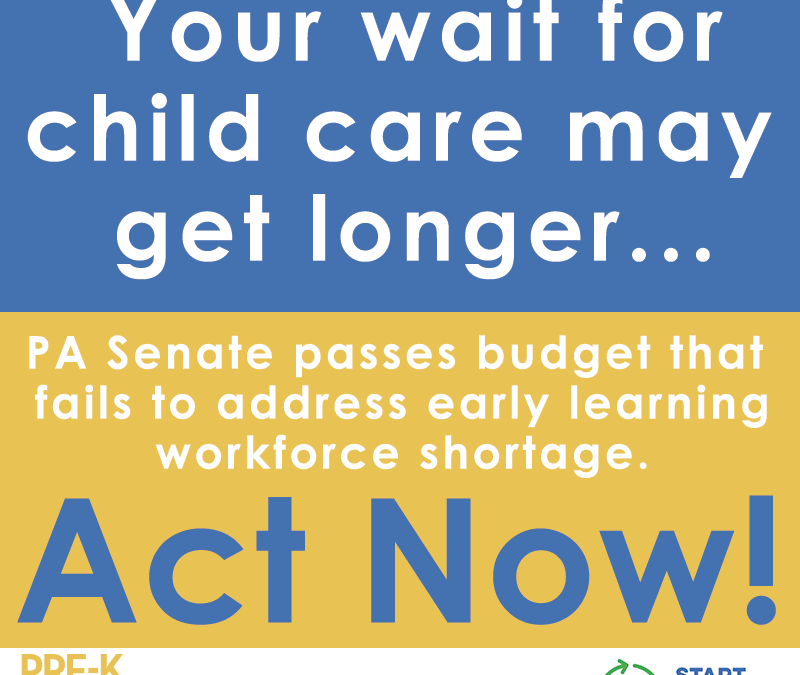
PA Senate Passes Budget with NO Funding to Address Early Learning Workforce Shortage
Child care / pre-k waitlists expected to get even longer
HARRISBURG, PA (June 30, 2023) — Today the Pennsylvania Senate passed its version of the state budget that fails to address the historic early learning workforce shortage. No new money was included for PA Pre-K Counts, Head Start Supplemental Assistance Program or efforts to stabilize the child care workforce. This means early learning providers will continue to lose teachers and close classrooms jeopardizing families’ ability to work.
For families with young children, access to child care and pre-k is a critical factor in their ability to go to work and ensure their children are in a safe and nurturing environment. Nearly 70 percent of all households with children younger than age 6 have all available caregivers in the workforce—that’s over 537,000 households.
For all other business sectors, the early learning sector is the workforce behind the workforce. When families can’t get child care, their children suffer, their income drops and the state’s economy is shortchanged. In a time of severe labor shortages, and billions in state budget surplus, the Senate’s failure to ensure parents have access to child care is a tragic oversight.
For all Pennsylvanians, when businesses aren’t fully staffed or staff are unreliable due to lack of child care, they cannot produce goods or provide services, creating shortages and increasing prices. So whether one has young children or not, the labor shortage in the early care and education sector matters to all of us.
The statewide Pre-K for PA and Start Strong PA campaigns are calling on Governor Shapiro and the Pennsylvania House of Representatives to invest in the workforce behind the workforce by:
- Investing in Pre-K Counts
- Investing in the Head Start Supplemental Assistance Program
- Boost funding for the child care workforce by increasing the child care services line item
About Pre-K for PA
Pre-K for PA is an issue campaign supported by individuals and organizations across Pennsylvania who believe that investing in our children is the right choice and an urgent necessity. Our vision is that every 3-and 4-year-old in Pennsylvania will have access to high-quality pre-k. For more information www.prekforpa.org.
About Start Strong PA
Start Strong PA launched in 2019 to support healthy child development, working families, and the economy by increasing access to and affordability of high-quality child care programs for young children. Learn more at www.startstrongpa.org
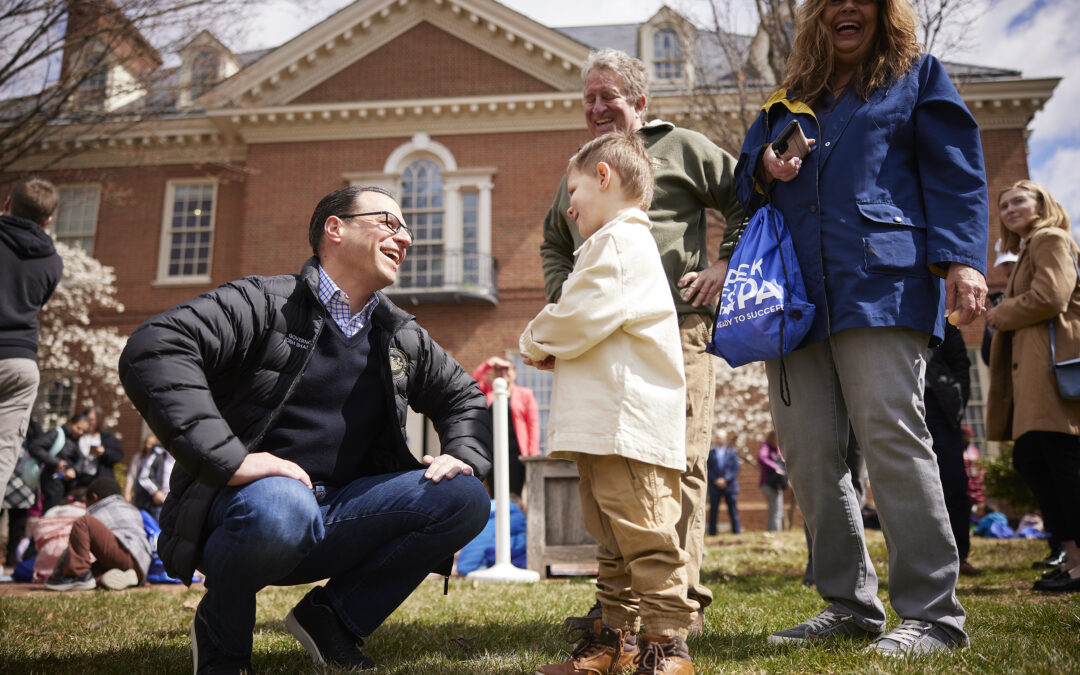
Governor and First Lady Shapiro Host Annual Easter Egg Hunt at Governor’s Residence, Highlight Importance of Investing in Early Childhood Education Across the Commonwealth
Harrisburg, PA (March 28, 2023) – Governor Josh Shapiro and First Lady Lori Shapiro hosted pre-school classrooms and families from across the commonwealth at the annual Easter Egg hunt at the Governor’s Residence today. The event was co-sponsored by Pre-K for PA, a non-partisan advocacy group that supports the expansion of high-quality, publicly funded pre-k.
“Safe and strong communities are built on the foundation of an adequate and equitable education, from pre-K through college – and we must invest in early education so that every child in Pennsylvania can get the best possible start in life,” said Governor Shapiro. “Strong early childhood education programs set students up for success, both inside and outside of the classroom, and that’s why my budget invests over $30 million in Head Start and Pre-K Counts to help us recruit more preschool teachers and serve more students. Lori and I are thrilled to welcome preschool students and teachers to the Residence, and we’re committed to working just as hard for all Pennsylvania children as we do for ours.”
“When our children have access to high-quality pre-K from dedicated and hard-working educators, the entire Commonwealth thrives,” said First Lady Shapiro. “Josh and I are excited to join students, educators, and advocates from across the Commonwealth today to bring attention to this important issue. We are committed to doing our part to ensure that every Pennsylvania child has the support and resources they need to thrive, and we extend our gratitude to the hardworking educators who provide quality education to children across the Commonwealth every day.”
Governor Shapiro’s first budget proposal begins to address the growing shortages of pre-kindergarten and Head Start teachers by including a $32.7 million increased investment to increase the cost per child reimbursement rates in the 2023-24 budget.
“Today, only 43 percent of eligible children in Pennsylvania benefit from the once-in-a-lifetime opportunity to attend high-quality, publicly funded pre-k,” said Kari King, President and CEO of Pennsylvania Partnerships for Children. “Our coalition is energized to be working with Governor Shapiro to continue to advance the expansion of pre-k in Pennsylvania. His ongoing commitment helps ensure this valuable early learning experience will continue to become available to more and more children.”
Studies show that children who participate in high-quality pre-kindergarten perform better in school, graduate at higher rates, and earn more throughout their working lives compared to peers who do not have access to early learning programs. Additionally, children who were previously enrolled in Pre-K Counts outperform their economically disadvantaged peers in third grade math and reading.
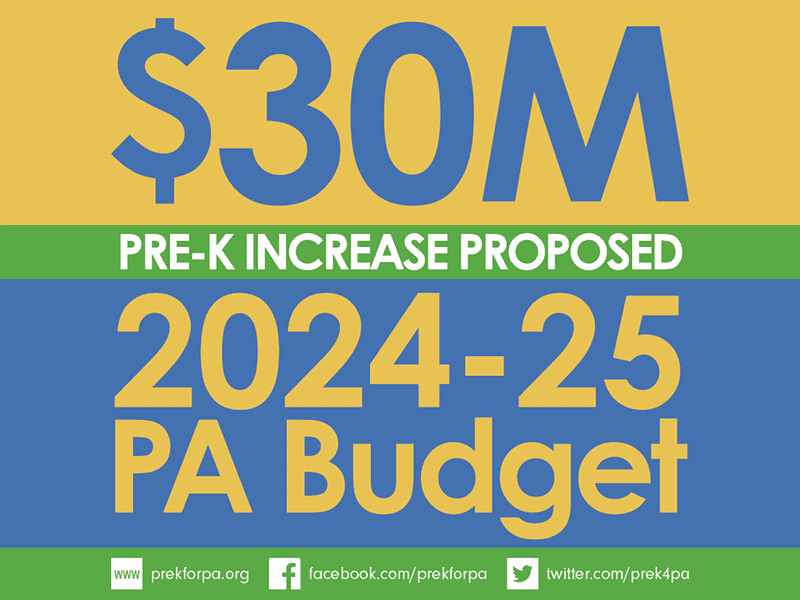
Governor Shapiro’s 2023-24 budget proposal specifically includes an additional $30 million in new funding for the Pre-K Counts program to increase rates by approximately $1,000 per child (full-day) / $500 per child (part-day) and $2.7 million in new funding for the Head Start Supplemental Assistance Program to also increase the cost per child rate.
This is Governor and First Lady Shapiro’s first Easter Egg Hunt in partnership with Pre-K for PA, which annually welcomes pre-K classrooms from across Pennsylvania to the Pennsylvania Governor’s Residence to participate in an Easter egg hunt and celebrate the importance of high-quality, accessible early learning programs.
To learn more about pre-k in Pennsylvania, please visit www.prekforpa.org
###