Pittsburgh Pre-K for PA Provider Carriage House Children’s Center Welcomes Sen. Costa and Rep. Frankel to End of Year Celebration
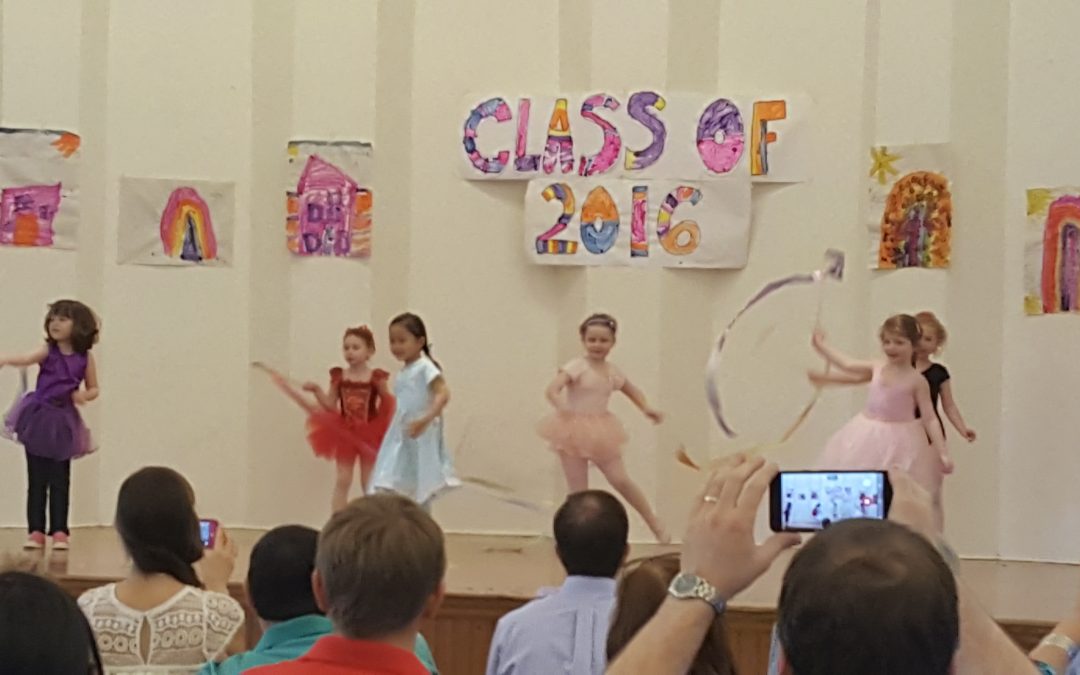
Pittsburgh, PA May 27, 2016 – As priorities in the 2016-17 fiscal year budget negotiations are being identified in Harrisburg, Pre-K for PA provider Carriage House Children’s Center celebrated the advancement of its pre-k class to kindergarten alongside PA State Senator Jay Costa and PA Representative Dan Frankel today.
“I’m so proud of everything these children have accomplished this year,” Senator Costa said. “As pre-k graduates, they’ve now started down the path to one of the most exciting journeys of their life that only a great education can provide. These young minds are the reason why we need to continue investing in early education programs and continue providing kids with the key to the future to open the door to endless possibilities.”
Studies show that children who attend high-quality preschool enter kindergarten with better pre-reading skills, richer vocabularies, and stronger basic math skills than those who do not.
“My daughter Cara is ready to start her new school in the fall largely because Carriage House has laid a great foundation for her to build upon,” said Melissa Rackoff, parent of Carriage House pre-k student. “Her pre-k education has focused on, not just her academic progress, but on her social and emotional development. The magical mix of encouragement and support that the teachers provide has bolstered Cara’s confidence and prepared her for the next set of challenges.”
Pre-K for PA providers across the state support continued investment in pre-k, and are urging the Pennsylvania legislature and the governor to expand access to thousands of at-risk kids in the final 2016-17 budget. Specifically, they are calling for $90 million in additional funding part of the 2016-17 final state budget.
“The importance of a quality pre-k education for our children cannot be overstated,” said Rep. Frankel. “It is the foundation upon which they can build their K-12 studies and ultimately become successful pillars of the community. I have always been proud to support pre-k education in my community and in the legislature.”
While the 2015-16 budget investment was a positive step, the fact remains that more than 120,000 income eligible 3- and 4-year-olds do not have access each year due to insufficient funding.
The 2015-16 state budget included $30 million in additional funding for PA Pre-K Counts and Head Start Supplemental Assistance programs – expanding access to more than 6,000 at-risk children. Allegheny County has more than 12,500 at-risk 3- and 4-year-olds, and a staggering 58 percent of them – about 7,300 children – lacked access to publicly funded, high-quality pre-k last year.
Across Pennsylvania, there are more than 175,000 3- and 4-year-olds who are at-risk because they are in lower income households—70 percent of these at-risk young learners – more than 120,000 children statewide – had no access to publicly funded pre-k last year.
Pre-K for PA is an issue campaign supported by individuals and organizations across Pennsylvania who believe that investing in our children is the right choice and an urgent necessity. Its vision is that every 3- and 4-year-old in Pennsylvania will have access to high-quality pre-k. For more information visit www.prekforpa.org.

Westmorland County Pre-K for PA Provider Ruffsdale Center Welcomes Rep. Harhai and Rep. Dunbar to End of Year Celebration
Sen. Bartolotta Reads to Students from Community Action Southwest Head Start during Visit to Flenniken Library
Ruffsdale, PA May 26, 2016 – As priorities in the 2016-17 fiscal year budget negotiations are being identified in Harrisburg, Pre-K for PA provider Ruffsdale Center, a program of Westmoreland Community Action Head Start, celebrated the advancement of its pre-k class to kindergarten alongside PA Representative Ted Harhai and Representative George Dunbar today.
During the same time today in Carmichaels, PA State Senator Camera Bartolotta read to students from Community Action Southwest Head Start at the Flenniken Library during their visit. Community Action Southwest Head Start received Pre-K Counts expansion funds earlier this year as part of the $30 million investment in the 2015-16 state budget. This funding provides access to high-quality pre-k for more local children.
Studies show that children who attend high-quality preschool enter kindergarten with better pre-reading skills, richer vocabularies, and stronger basic math skills than those who do not.
“The kindergarten I attended doesn’t exist anymore,” said Scott Poloff, M.Ed., Director of Children Services Westmoreland Community Action. “What we expect kids to do in kindergarten today is dramatically different and increasingly demanding. Kids need the Head Start and pre-k preparation to enter Kindergarten ready to learn.
“So much of what we do in early childhood is about social and emotional development, and over the course of this year we have seen these kids grow and our goal is to see every kid have the same opportunity.”
Pre-K for PA providers across the state support continued investment in pre-k, and are urging the Pennsylvania legislature and the governor to expand access to thousands of at-risk kids in the final 2016-17 budget. Specifically, they are calling for $90 million in additional funding part of the 2016-17 final state budget.
“A multi-year goal for growing access to high-quality pre-k for all of the income eligible children and begin looking at pre-k affordability issues regarding middle class families must be identified as an urgent priority at the negotiating table this month,” said Blair Hyatt, Executive Director of the Pennsylvania Head Start Association, a Pre-K for PA Principal Partner.
While the 2015-16 budget investment was a positive step, the fact remains that more than 120,000 income eligible 3- and 4-year-olds do not have access each year due to insufficient funding.
The 2015-16 state budget included $30 million in additional funding for PA Pre-K Counts and Head Start Supplemental Assistance programs – expanding access to more than 6,000 at-risk children. Westmoreland County has more than 3,900 at-risk 3- and 4-year-olds, and a staggering 71 percent of them – about 2,790 children – lacked access to publicly funded, high-quality pre-k last year. In Greene County, 59 percent of the more than 520 at-risk 3- and 4-year-olds lacked access last year.
Across Pennsylvania, there are more than 175,000 3- and 4-year-olds who are at-risk because they are in lower income households—70 percent of these at-risk young learners – more than 120,000 children statewide – had no access to publicly funded pre-k last year.
Pre-K for PA is an issue campaign supported by individuals and organizations across Pennsylvania who believe that investing in our children is the right choice and an urgent necessity. Its vision is that every 3- and 4-year-old in Pennsylvania will have access to high-quality pre-k. For more information visit www.prekforpa.org.
# # #

Advocates in Pittsburgh say early education helps kids a lot, so why isn’t there more funding?
May 23, 2016 By Iain Oldman, PublicSource
Pittsburgh city council members, pre-K educators and child care advocates gathered Monday to raise awareness and issue a call to action about the need for affordable and high-quality early education.
Council members Dan Gilman, Natalia Rudiak and Deb Gross spoke at the City County Building in downtown Pittsburgh for a press conference planned by advocacy groups Pittsburgh Raising Every Kid: PreK Now, One Pittsburgh and the Pittsburgh Association for the Education of Young Children (PAEYC).
Nearly 12,600 children living in Allegheny County are part of a family who live three times below the poverty level in what equates to a family of four earning $72,750 or less a year, according to a report released by Pennsylvania Partnerships for Children.
Of those children eligible for pre-K programs, more than 7,300 do not have access to publicly funded, high-quality early education, according to the report. Statewide, the number of children lacking access approaches 120,700 children.
“It doesn’t matter what laws we pass… if you can’t afford to raise a family in Pittsburgh, it is not a city anymore,” said Councilman Dan Gilman, representative of Pittsburgh’s District 8.
The Pew Charitable Trusts describes high-quality pre-K programs as programs that include well educated teachers, low teacher-student ratios and small class size, curriculums aligned to K-12 standards and engaged families.
Numbers provided by the city council show that children who do not receive high-quality early education are 25 percent more likely to drop out of school, 50 percent more likely to be placed in special education and 60 percent less likely to attend college.
“So much of that can be avoided by providing early education,” Rudiak said. “We know we can’t sit around and wait for Harrisburg and D.C. to act.”As part of the City Council Women’s Caucus in Pittsburgh, Gross and Rudiak sponsored legislation that was passed unanimously in December to create the Office of Early Childhood.
According to the city council’s press release, the purpose of the office is to “align city services that affect young children,” including early education. The office has yet to name an Early Childhood Manager, though applications for the position recently closed. The position will carry a salary of $65,901 per year, according to Pittsburgh’s 2016 operating budget.
The City Council Women’s Caucus also introduced legislation in 2014 to conduct a “child care needs assessment” to evaluate where child care exists in the city and what providers require to boost their quality of child care. Rudiak, who represents Pittsburgh’s District 4, said Monday that the assessment will be released soon.
“Pittsburgh is ready to take the next step toward universal, high-quality early education” said Erin Kramer, One Pittsburgh’s Director, according to a press release. “As our state Legislature enters budget season, we are joining together with old and new allies to remind our representatives that investments in early childhood yield returns across a lifetime. Children are the future of this state, and we refuse to allow them to be left behind any longer.”
The PreK for PA campaign has an Early Childhood Action Day planned for June 14 in Harrisburg to meet with state legislators.
In February, Gov. Tom Wolf announced that he intended to ask the General Assembly to earmark $90 million of state funding to support preschool programs in fiscal year 2016-17. If the funds are granted, the state budget for preschool programs next year would increase from $166.5 million to $256.3 million.
That would open and expand access to preschool programs to about 14,000 children, according to the Wolf administration. A PreK for PA statement said that would still leave more than 107,000, or 61 percent, of at-risk preschool-aged children without access to high-quality programs.
Sarah Byrne-Houser, public policy and outreach associate for PAEYC, said the early childhood education advocacy groups anticipate challenges in the state budget process.
Read the full article here.
Schweiker, Rendell Join Leaders from Across PA; Call on Legislature to Fund Pre-K
Letter to the Legislature calls for $90 million investment to expand Pre-K to thousands of at-risk kids across PA
Harrisburg, PA (May 24, 2016) – Former Governors Edward G. Rendell and Mark S. Schweiker led a group of influential business, civic, military and law enforcement leaders from across the state today in support of continued investment in pre-k, urging the Pennsylvania legislature and the governor to expand access to thousands of at-risk kids in the final 2016-17 budget.
In a letter to leadership offices of the Pennsylvania legislature, the signers urged leaders in Harrisburg to cement bi-partisan consensus around a multi-year goal for growing access to high-quality pre-k for all of the income eligible children and begin looking at pre-k affordability issues regarding middle class families. Specifically, they called for $90 million in additional funding (as proposed by Governor Tom Wolf) as part of the 2016-17 final state budget.
This proposal builds on the $30 million in new funding already enacted for the second half of the current school year. If realized, $120 million in additional funding over two years for high-quality pre-k will serve an additional 14,000 three- and four-year-olds.
Across Pennsylvania, there are more than 175,000 three- and four-year-olds who are at-risk because they are in lower income households—70 percent of these at-risk young learners – more than 120,000 children statewide – had no access to publicly funded pre-k last year.
EDITOR’S NOTE: Below is the full text of the letter and signatories.
You have heard from many of us on the life altering benefits that high quality pre-kindergarten can provide to our commonwealth’s youngest learners. You have also heard of the limited availability of such programs serving only one out of every six preschool age children in Pennsylvania.
The 2015-16 state budget included $30 million in additional funding for PA Pre-K Counts and Head Start Supplemental Assistance programs – expanding access to more than 6,000 at-risk children. While this investment was a positive step, the fact remains that more than 120,000 income eligible three- and four-year-olds do not have access each year due to insufficient funding.
We encourage you to work with your colleagues to cement bi-partisan consensus around a multi-year goal for growing access to high quality pre-k for all of the income eligible children and begin looking at pre-k affordability issues regarding middle class families.
Specifically, we ask your support of $90 million in additional funding as part of the 2016-17 final state budget as yet another incremental step towards the above-mentioned goal.
Such an investment will set us on a path to reduce educational, public welfare and incarceration costs and have the most important added benefit of ensuring brighter futures for more of the commonwealth’s children.
Thank you very much for taking the time to consider this correspondence.
Respectfully submitted,
Mark Schweiker, 44th Governor, Commonwealth of Pennsylvania
Ed Rendell, 45th Governor, Commonwealth of Pennsylvania
Mary Stengel Austen, President & CEO, Tierney Communications
Joe Bard, Executive Director, PA Association of Rural and Small Schools
Bruce Bartels, Former President, WellSpan Health
Dennis Benchoff, Lieutenant General (Ret.), United States Army
Don Bernhard, Former Director, Community Affairs, PP&L
Betsy Bort, Vice-President, Commercial Lending, Erie Bank
Steven Bradley, Chairman, African-American Chamber of Commerce
Jim Buckheit, Executive Director, PA Association of School Administrators
Anthony Campisi, President & CEO, Glatfelter Insurance Group
Robert Celeski, Chairman, Employees Community Service Fund of GE
Denise Cesare, Former President & CEO, Blue Cross of Northeastern Pennsylvania
David Cohen, Senior Executive Vice-President, Comcast Corporation
Pete Danchak, President – Northeast PA, PNC Bank
Phil Devorris, President & CEO, Blair Companies
Ron DiNicola, Partner, DiNicola Law Offices
Stephanie Doliveira, Vice-President, Human Resources, Sheetz Inc.
Bob Esch, Vice-President External Affairs, American Refining Group
Tim Fallon, Chief Executive Officer, PBS-39
Varsovia Fernandez, Senior Vice-President, Phila. Market Leader, Customers Bank
Frank Ford, CEO – Allentown Campus, St. Luke’s University Health Network
Sara Furlong, Executive Communications Coordinator, American Refining Group
Robert Fyock, Sheriff, Indiana County Sheriff’s Office
Jeff Gayman, Senior Vice-President, Retail Banking & Consumer Lending, Orrstown Bank
Thomas Gluck, Executive Director, PA Association of Intermediate Units
Brad Gosser, Executive Director and Vice-President, Greenville-Reynolds Dev. Corporation
Michael Hanes, President & CEO, Whitaker Center for Science and the Arts
Bill Hankowsky, Chairman, President & CEO, Liberty Property Trust
Dave Hawk, Chairman of the Board, Gertrude Hawk Chocolates
Paul Healey, Executive Director, PA Association of Elementary and Secondary School Principals
Fritz Heinemann, President & CEO, EconomicsPennsylvania
Tara Hemmer, Area Vice-President, Waste Management of Greater Mid-Atlantic
Tom Hogan, District Attorney, Chester County District Attorney’s Office
Dan Hoover, President & CEO, Roaring Spring Blank Book Company
Joe Hurd, President & CEO, Blair County Chamber of Commerce
Renee Cardwell Hughes, Chief Executive Officer, American Red Cross SE PA Chapter
Bill Isler, President & CEO, Fred Rogers Company
Kathy Killian, Vice-President of Human Resources & Customer Services, Philadelphia Phillies
Tom King, Chief of Police, State College Police Department
James Kinneer, Vice-President, Indiana Regional Medical Center
Robert Krasne, Chief Executive Officer, Steinman Communications
Jay Kshatri, Chairman of the Board, Community Services for Children, Inc.
Allen Kukovich, Attorney At Law
Keith Leaphart, President & CEO, Replica Creative Inc.
Alice Lindenauer, Managing Director, Global Human Resources, Hamilton Lane
Jerry Maginnis, Office Managing Partner (Ret.), Phila. Office, KPMG LLP
Nathan Mains, Executive Director, PA School Boards Association
Ed Martin, Chief Executive Officer, Goodx.com
Dwight Mathis, Market Executive, Merril Lynch
Rob McNeill, Managing Partner, Deloitte, LLP – Greater Philadelphia Region
Paula McWilliams, President & CEO, Heritage Community Initiatives
Phyllis Mundy, State Representative (Ret.), 120th Legislative District
Dennis Noonan, Vice-President, Sales & Marketing, Ford Business Machines
Jerry Oleksiak, President, Pennsylvania State Education Association
Dave Patti, President & CEO, Pennsylvania Business Council
Kathleen Pavelko, President & CEO, WITF Public Media
Joseph Peluso, Management Consultant
Phil Peterson, Deputy-Director, ReadyNation
Norm Rich, Former President & CEO, Weis Markets Inc.
Kristen Rotz, President, United Way of Pennsylvania
Brian Schreiber, Executive Director, Jewish Community Center
Nick Scott, Jr., Vice-President, Scott Enterprises
Judith von Seldeneck, Founder, Chairman & CEO, Diversified Search
Sandra Strauss, Director of Public Advocacy, PA Council of Churches
Sam Talarico, President, Northwestern Region – PSEA
Stephen Tang, President & CEO, University City Science Center
Vincentina Taylor, President, Waveline Direct, LLC
Art Thomas, Vice-President, Meck-Tech, Inc.
Kevin Thomas, Executive Director, PA District Kiwanis International
John Touey, Principal, Salveson Stetson Group
James Waddington, Director Strategic Marketing Solutions, Lockheed-Martin
Seth Williams, District Attorney, Philadelphia District Attorney’s Office
Andrew Williford, Vice-President, Volvo Construction Equipment Operations
Tom Wilson, Rear Admiral (Ret.), United States Navy
Colby Windholz, Vice-President of Business Banking, First National Bank
Jake Witherell, Chief Operating Officer, Schell Games
Todd Wolynn, President & CEO, Kids Plus Pediatrics
Suzanne Yunghans, Executive Director, PA Chapter American Academy of Pediatrics
Pre-K for PA is an issue campaign supported by individuals and organizations across Pennsylvania who believe that investing in our children is the right choice and an urgent necessity. For more information visit www.prekforpa.org.
The Pennsylvania Early Learning Investment Commission is a network of business leaders that work to secure public investment in early learning by focusing on practices that are educationally, economically, and scientifically sound by increasing business, civic, and public awareness of the importance of early childhood education.
# # #